Box Interiors
Sides, back, floor and the underside of the top, sprayed on site on the same day as the outside of the boxes. Melamine and wood interiors both take paint once they are primed correctly.
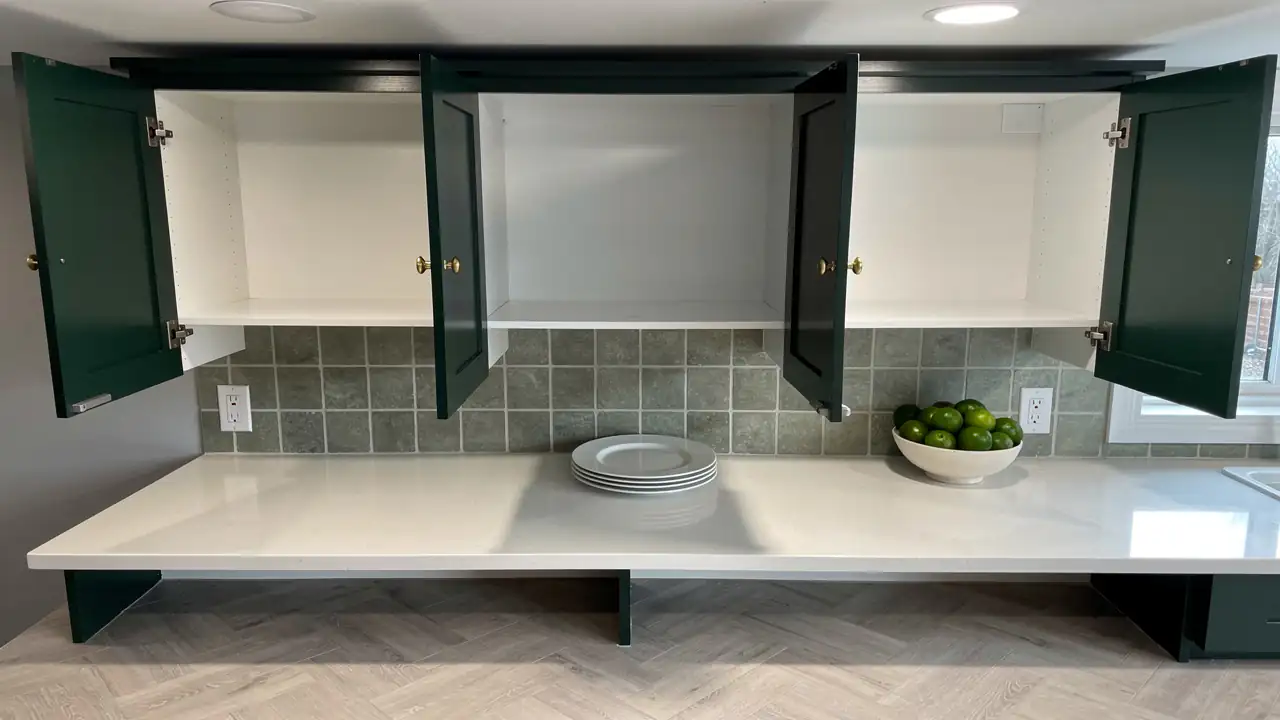
Inside the box, not just the doors
Most cabinet painters stop at the edge of the box, and for a closed cupboard full of dishes that is usually fine. Kitchener Elite Cabinet Painting & Refinishing paints cabinet interiors where they actually show or have worn out: glass-front uppers, open shelving, scratched shelves, yellowed oak boxes and cupboards that smell of decades of spices or smoke.
We have painted inside cabinets across Kitchener and Waterloo Region for 16+ years and 1,700+ jobs. That experience tells us which interiors are worth $45 to $65 a box and which ones you will never notice once the doors close.
Interiors are an add-on to our kitchen cabinet painting service and get the same degreasing, primer and sprayed coats as the outside. We tell you honestly which of yours are worth including.
What we paint inside
Cabinet interior painting covers the sides, back, floor and ceiling of each box, plus the shelves and their front edges. We paint as few or as many boxes as you want, from two glass-front uppers to a whole kitchen.
Sides, back, floor and the underside of the top, sprayed on site on the same day as the outside of the boxes. Melamine and wood interiors both take paint once they are primed correctly.
Adjustable shelves come out and can travel to the shop with your doors, while fixed shelves are painted in place. The front edge gets extra care, because it is the part you see and bump.
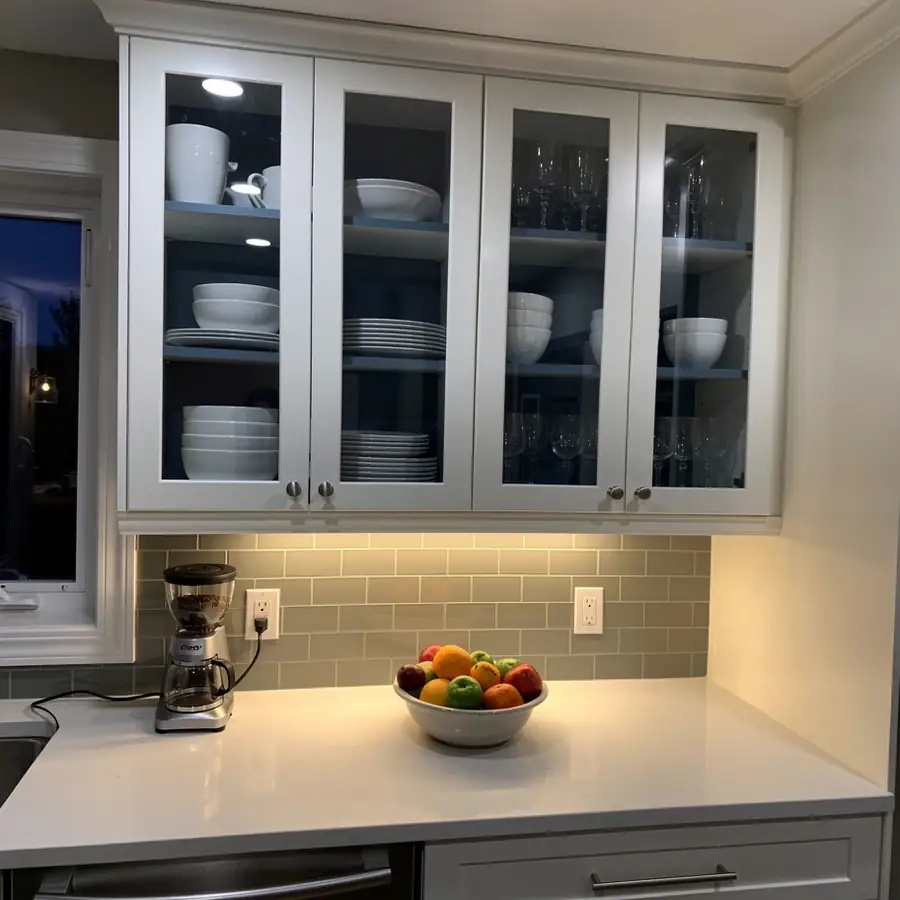
Display cabinets and open shelves show their insides all day, so they are the interiors most worth painting. A matching or contrasting interior colour can turn a plain upper into a feature.
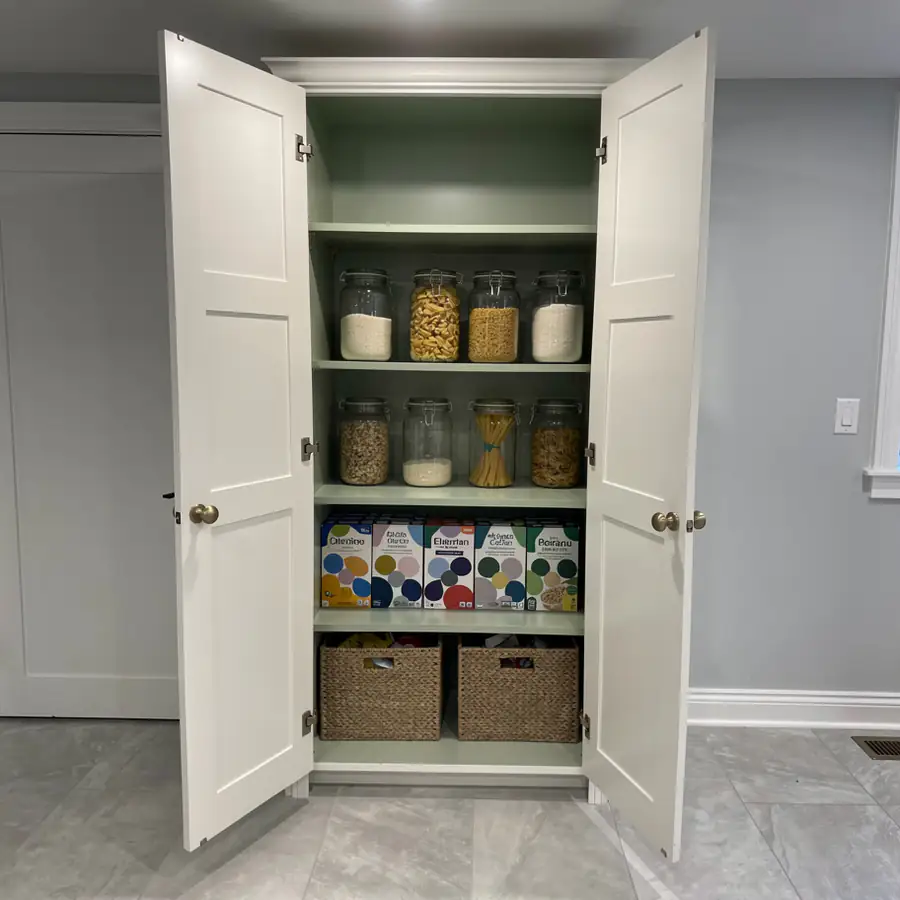
Tall pantries, linen cabinets and bookcases are mostly shelves, so the inside is what you look at. Our pantry cabinet painting and built-in cabinet painting services include interiors on request.
Worth it or skip it
Interior painting is worth it wherever the inside of a cabinet is on show or worn out, and usually not worth it inside closed boxes that are clean and sound. The question to ask is simple: will you see it, or touch it, often enough to care?
These interiors show or wear, so paint makes a visible difference.
Here the paint would be hidden, or would wear faster than the surface it covers.
Problems we fix inside
The three interior problems we see most are shelves worn through by daily use, sticky contact paper left by a previous owner, and smells that have soaked into the wood. Paint fixes all three, but only if the prep underneath is done properly.
Shelves under heavy plates and cast iron wear down to bare wood or particleboard at the front edge. We sand the worn spots smooth, fill gouges with two-part filler and prime before any colour goes on.
Shelf edges chip when paint is thin on a sharp corner, so we ease each edge slightly with a sanding sponge first.
Old contact paper usually leaves a tacky film of adhesive that no primer will grip. We peel every sheet, remove the adhesive until the surface is clean and dull, then degrease twice with Krud Kutter before sanding.
Skipping that step is why DIY-painted shelves stay sticky or peel off in sheets.
Spice, cooking and smoke odours soak into unsealed wood and particleboard over the years. Zinsser B-I-N, a shellac-based primer, seals the surface so the odour stays locked under the new paint.
All our topcoats are waterborne and low odour, but a closed cupboard traps whatever smell there is. Leave the doors open for the first few nights after the walkthrough and any paint smell fades quickly.
The details that show
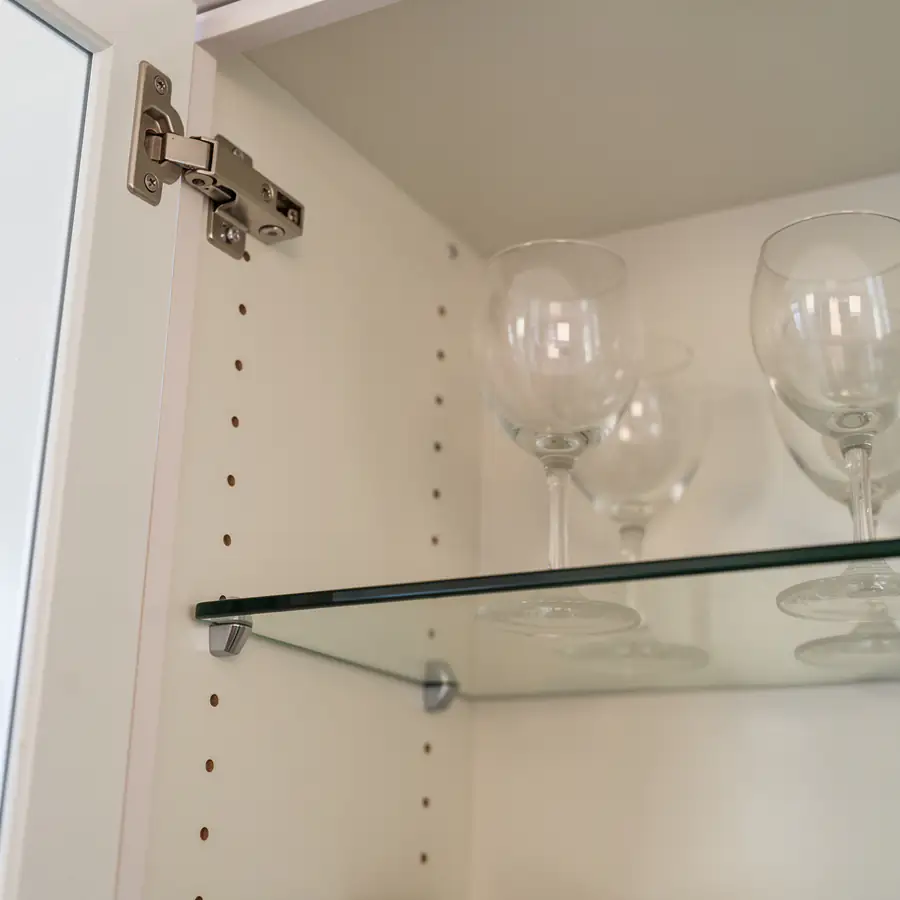
Inside a glass-front cabinet, sloppy detail shows more than colour does. Shelf pin holes clogged with paint, painted-over hinge plates and wavy lines where the interior meets the face frame are the giveaways of a rushed job.
This is how we keep the inside of a display cabinet looking factory-made:
Block resistance
Dishes stick to freshly painted shelves because the paint is dry to the touch long before it is fully hard. Painters call the fix block resistance: a finish's ability to stop sticking to whatever sits on it, which every paint gains slowly as it cures.
Our coatings are dry to touch in about an hour but take about 30 days to reach full hardness. A heavy stack of plates left in one spot during that time can leave a ring or pull at the surface.
Before and after
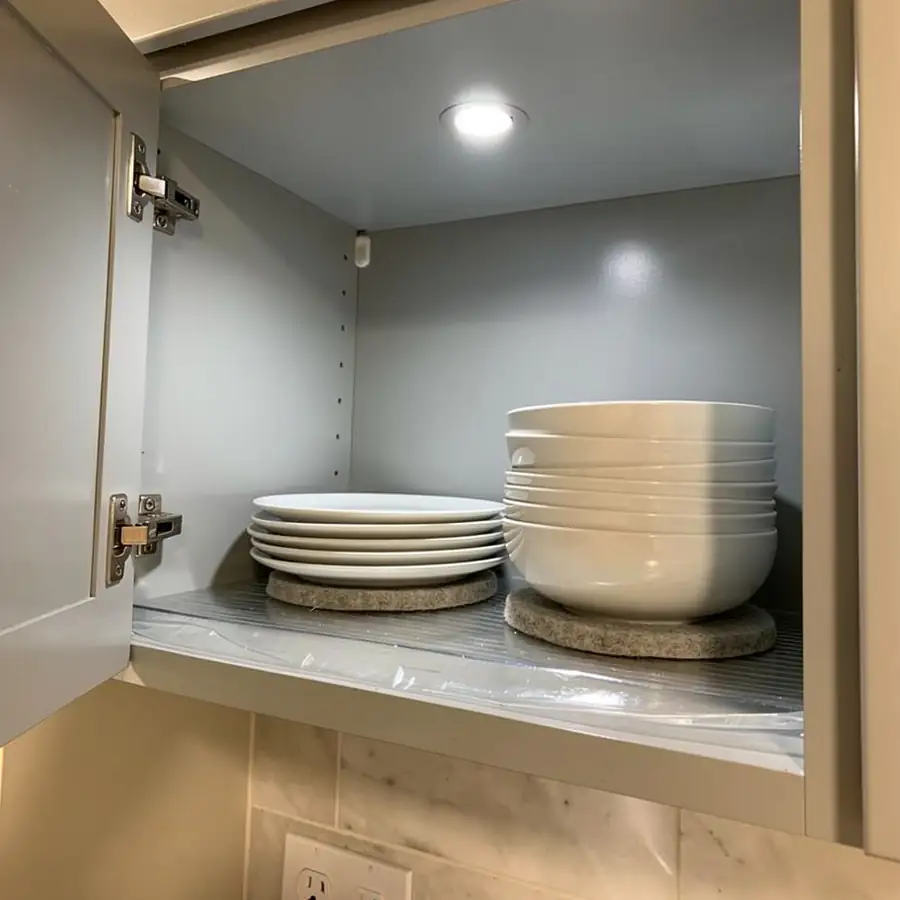
Every cabinet getting an interior finish must be completely empty before day 1, shelves included. Interiors are sprayed on the same day as the boxes, so they have several days to dry before the doors come back and you restock.
Empty every box and drawer we are painting and clear the counters. Laundry baskets in a spare room work well for everyday dishes.
Interiors, face frames and end panels are primed and sprayed with HVLP inside the zip walls, and the kitchen is off limits for about one day.
Doors and shelves go back in, shelf pins are refitted, and we check the interiors with you and leave the care sheet.
Restock lighter items first, use liners under heavy pieces and skip stick-on bumpers for 14 days while the paint reaches full hardness.
Priced per box
Painting cabinet interiors costs $45 to $65 per box before HST, added to the price of painting the outside. The range depends on box size, the number of fixed shelves and whether the surface is melamine, wood or badly worn.
| Interior job | Typical price before HST |
|---|---|
| One cabinet box interior | $45 to $65 |
| Pair of glass-front uppers | $90 to $130 |
| Six open or glass-front uppers | $270 to $390 |
| Whole kitchen of 18 boxes | $810 to $1,170 |
The outside of the cabinets follows our usual per-piece prices, and our cabinet painting price guide covers the rest of the quote. Interiors are always itemized, so you can add or drop boxes before you book.
Inside matches outside
Interiors get the same system as the outside of the cabinet, which is why ours look built-in rather than touched up.
One primer coat and two topcoats, sanded with 320 grit between coats, inside and out.
Interior coats are tinted to the same formula and sheen as the boxes, or to a second colour if you want contrast.
Interior work carries the same 1-year labour warranty against peeling, flaking or bubbling as the rest of the job.
We add interiors to kitchens in Waterloo, Cambridge and Guelph, often for sellers who want glass-front cabinets to photograph well before listing.
Common questions
Interiors are an optional extra, so most questions are about whether you really need them.
Usually not. We paint the face frames and the visible front edges of the boxes, so a closed cabinet looks finished when you open the door, and the interior can stay its original melamine or wood unless it shows through glass or is worn.
Yes. Many kitchens only need two to four display uppers done, which usually adds $90 to $260 to the quote.
Yes, as long as the job meets our $650 minimum. It suits pantries, linen closets and built-in bookcases where worn shelves are the real problem.
You can restock at the walkthrough, a few days after the interiors are sprayed, but go light for the first few weeks. The paint reaches full hardness at about 30 days.
Yes, removing contact paper and its adhesive is part of our interior prep. If the residue looks unusually heavy in your photos, we note it on the quote before you book.
Free quote
When you send photos for your cabinet painting quote, open a few doors and include a shot of the shelves inside. We will mark which interiors are worth painting and itemize them at $45 to $65 per box, so you choose exactly which ones to add.