One-Piece Routed MDF Doors
A single slab of MDF with a profile machined into the face, common in 2000s kitchens. With no joints, these doors never show seam lines, and they paint glass-smooth once the routed profile is sealed.
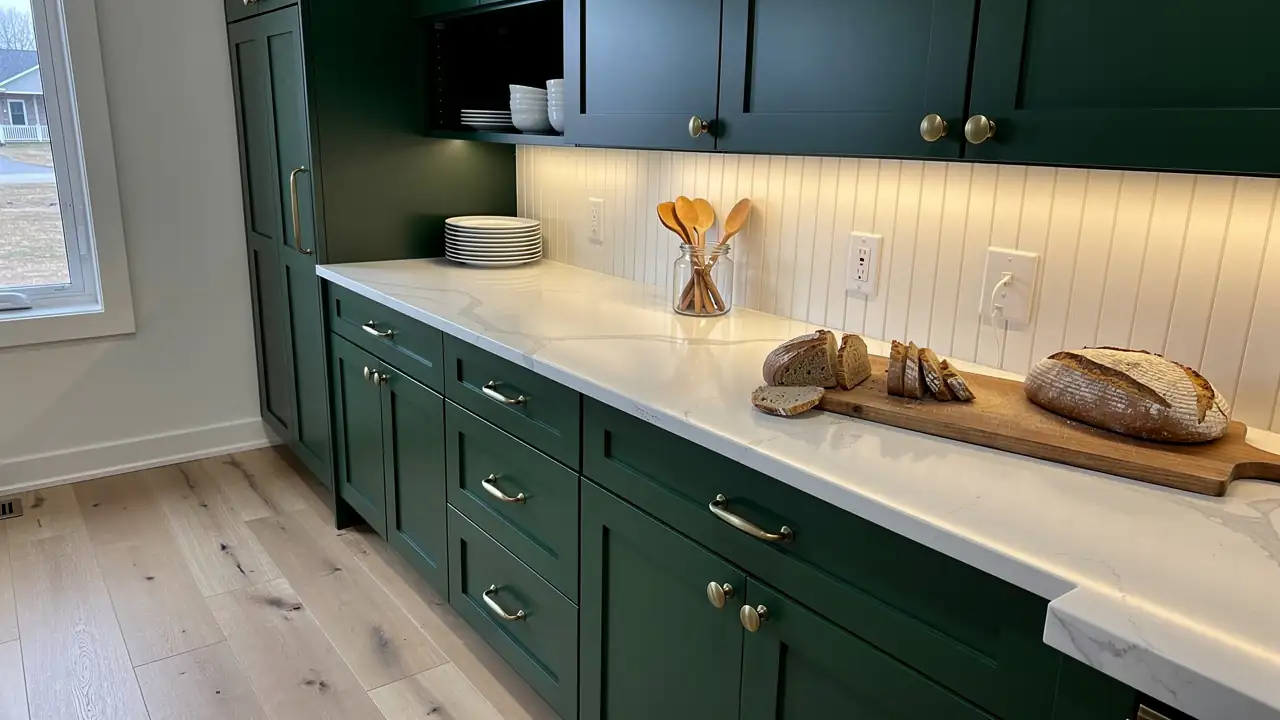
MDF, Shaker and new raw doors
Kitchener Elite Cabinet Painting & Refinishing paints MDF cabinet doors in Kitchener and across Waterloo Region, from one-piece routed doors in 2000s kitchens to five-piece Shaker doors and brand-new raw MDF fronts. MDF gives the smoothest painted finish of any cabinet material, because it has no grain at all.
It also has two weak spots. Its cut edges and routed profiles drink primer like a sponge, and five-piece Shaker doors can show hairline lines at the joints when Waterloo Region's winter air dries out.
With 16 years and more than 1,700 jobs behind us, we deal with both as a matter of routine. Edges are sealed twice with primer before the topcoat, and you get straight advice about humidity before your doors go back on.
What we paint
We paint three kinds of MDF door, and each one starts from a different place. All of them are sprayed in our booth with Renner 2K waterborne polyurethane, never rolled or brushed.
A single slab of MDF with a profile machined into the face, common in 2000s kitchens. With no joints, these doors never show seam lines, and they paint glass-smooth once the routed profile is sealed.
A flat centre panel framed by two stiles and two rails, in MDF, wood or a mix of both. Their four corner joints are where hairline lines can appear in dry winter air.
Unfinished doors bought for a new kitchen, a refacing job or a DIY project. Builders, DIYers and painters bring these to our cabinet door painting service, and we seal, prime and spray them in your colour.
The material
MDF takes paint better than any wood because it is fine wood fibre pressed with resin into a uniform board, with no grain, no pores and no knots. Paint lies on a flat, even surface, so a sprayed MDF door looks like a factory finish.
It is also stable. A one-piece MDF door barely moves with the seasons, so it holds a painted finish without the seam cracks that solid-wood doors can show.
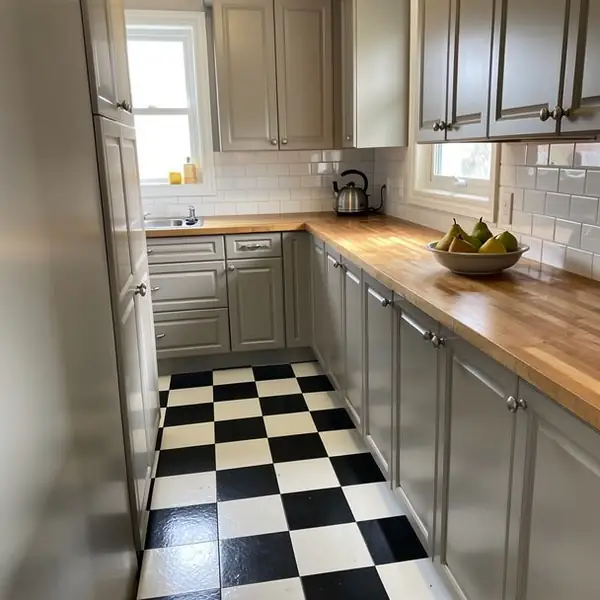
Edge sealing
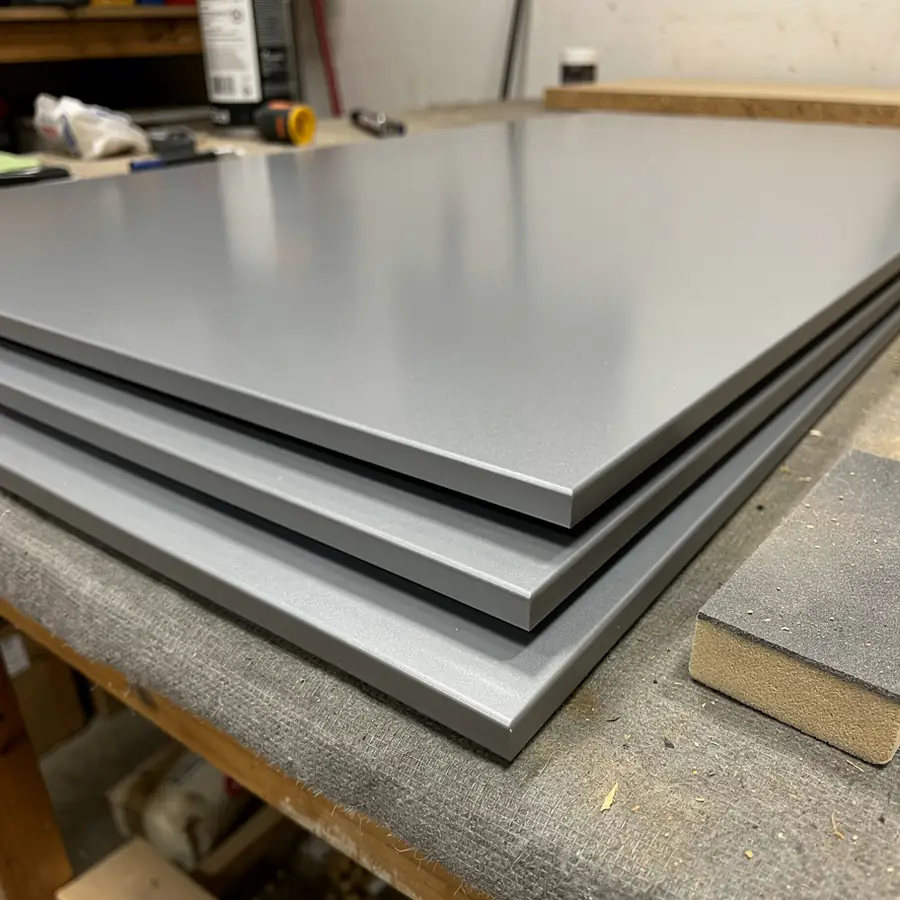
Raw MDF edges are far more porous than the face, so they soak up primer and swell slightly as they do. Unless they are sealed twice before the topcoat, the edges stay fuzzy and rough under the paint.
Sealing matters most on sink-base and dishwasher-side doors, because an open MDF edge is also where water gets in first.
Faces get a light scuff, and machined edges and profiles are hand-sanded with sanding sponges to knock down raised fibres.
Edges and routed profiles get a first coat of primer. It soaks in, swells the fibres and leaves a slightly rough surface.
Once dry, the edges are sanded smooth and primed a second time. That second coat closes the surface so the edge matches the face.
The whole door is primed, sanded at 320 grit and sprayed with two coats of Renner 2K in your colour and sheen, then racked to cure.
Two starting points
New raw MDF needs sealing, while previously painted MDF needs cleaning and bonding. The two look alike on the rack, but the prep is almost opposite.
Fresh from the supplier, raw MDF is clean but thirsty, so the work is all about sealing.
A painted MDF door from a 2000s kitchen already has a sealed surface, with years of grease and wear on top. The work is all about cleaning and bonding.
New raw doors are also how cabinet refacing with new doors works, and how we replace heat-damaged thermofoil cabinet doors. The cabinet boxes behind MDF doors are often melamine, which gets the same bonding primer used for painting melamine cabinets.
Pricing
MDF doors are priced like any other door: $110 to $150 each and $75 to $95 per drawer front, both sides sprayed, before HST. Edge sealing is part of that price, not an extra.
| Item | Price before HST |
|---|---|
| Cabinet door, both sides sprayed | $110 to $150 each |
| Drawer front | $75 to $95 each |
| Tall pantry door or full-height panel | $160 to $220 each |
| Medium kitchen, 21 to 35 pieces | $3,400 to $5,200 |
| Minor repair, such as a swollen edge | Usually $40 to $150 per item |
| Blum soft-close hinge, supplied and installed | $14 per hinge |
Flat slab doors sit toward the low end of the door range, Shaker doors in the middle, and deep routed profiles higher, because they take longer to sand and seal. The minimum job is $650, and every rate is on our cabinet painting price list.
Rates are the same for cabinet painting in Cambridge, and small jobs for cabinet painting in Elora may add a flat $75 travel fee.
Questions
Most MDF questions come down to two worries: lines at the corners of Shaker doors, and what to do when a door has swollen from water.
Those hairline lines are the joints between the rails, stiles and panel of a five-piece door, showing through the paint as the parts shrink in dry winter air. They are cosmetic, and keeping indoor humidity at 35 to 50% keeps them to a minimum.
Usually not. A small, dry swollen edge can sometimes be sanded, sealed and repainted as a minor repair, but MDF that has puffed up and gone soft never returns to shape, and that door should be replaced.
Yes, always. Raw MDF has no finish at all, and its edges need two coats of primer before the whole door is primed and topcoated.
For a smooth painted look, yes. MDF has no grain or tannins and moves less than solid wood, although solid wood copes better with water at the edges.
Choose one-piece routed MDF if you want a Shaker look with no chance of joint lines, and five-piece if you want a real recessed panel with deeper shadow lines. Both paint beautifully, and the difference is mostly in how they age through Waterloo Region's dry winters.
Doors are dry to the touch in about an hour and rehung after a minimum of 24 to 48 hours in the shop. Clean them gently for the first 7 days, and the finish reaches full hardness at about 30 days.
Free quote
Send photos of your MDF or Shaker doors, or a list of sizes if you have new raw doors, and we will send a fixed written quote within 1 business day. Tell us the colour and sheen, and we will spray a sample door before the full order.