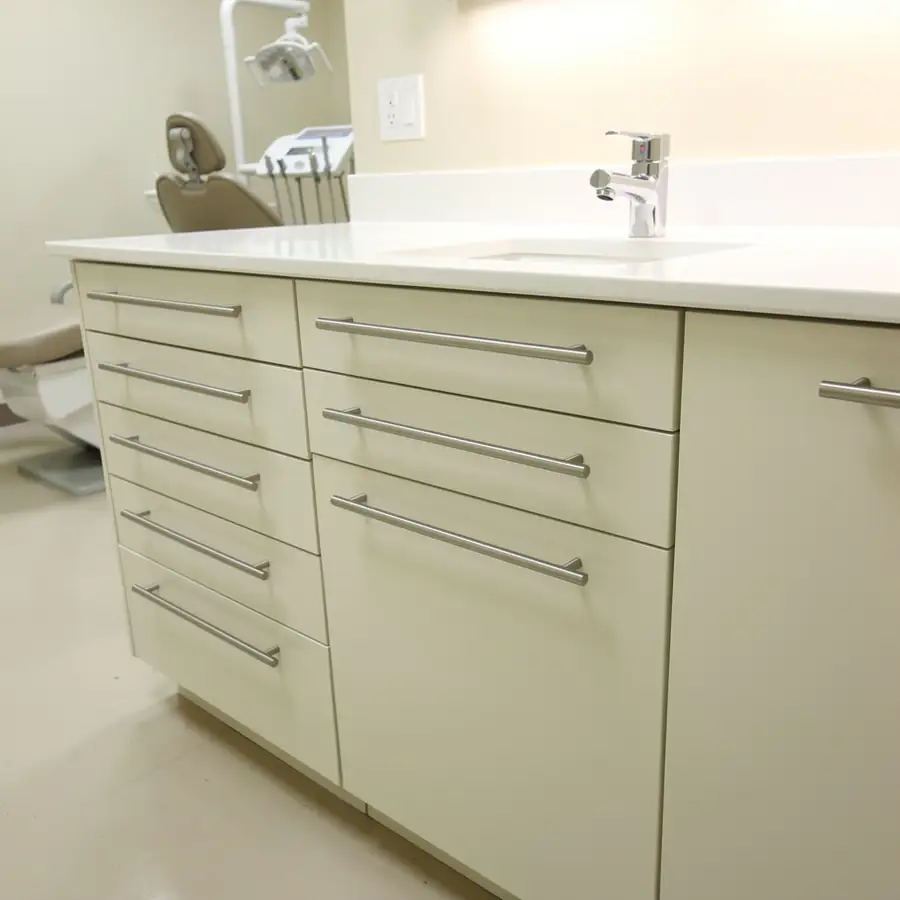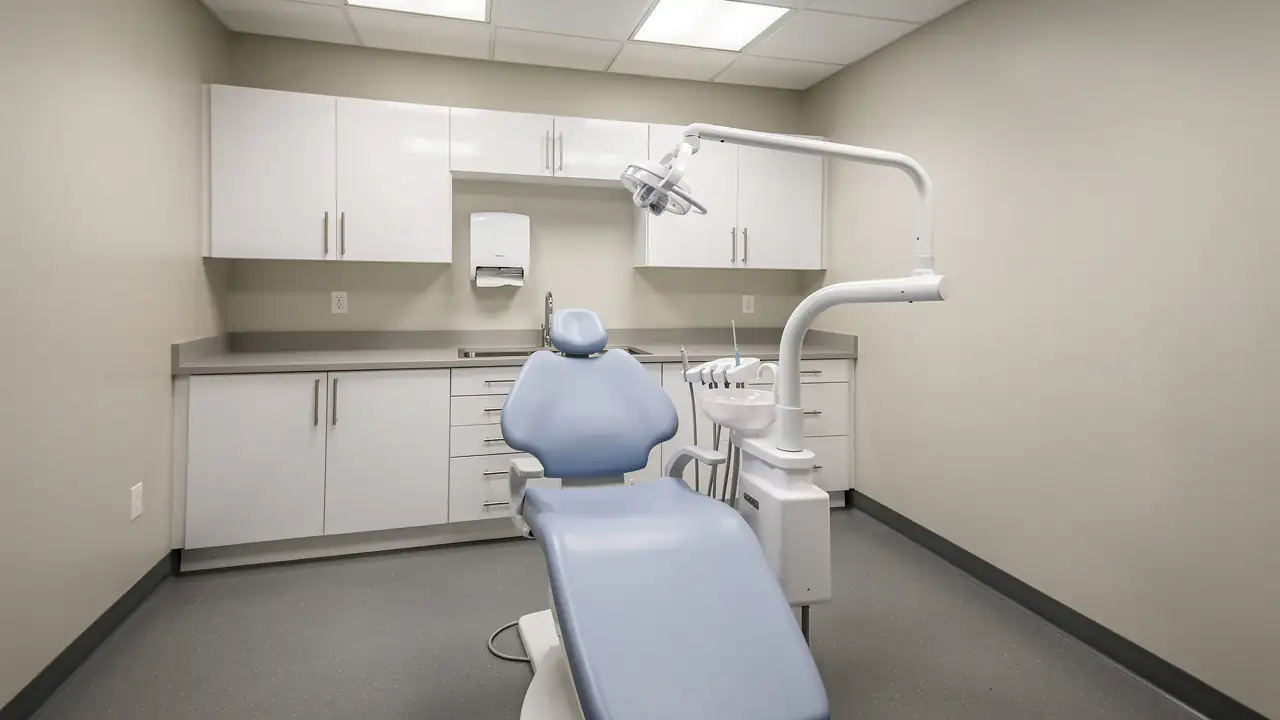
White dental operatory cabinets painted in Kitchener

Dental, medical and allied clinics

Dental and Medical Office Cabinet Painting in Kitchener

Kitchener Elite Cabinet Painting & Refinishing repaints the casework in dental offices, family medicine clinics and physiotherapy, chiropractic and optometry practices across Kitchener-Waterloo. Clinic cabinets get wiped with disinfectant between every patient, often dozens of times a day, and ordinary cabinet paint turns soft, dull and tacky under that routine long before it chips.

That is why the doors and drawer fronts in your operatories get the same two-component Renner 2K polyurethane our shop sprays on high-end kitchens, a crosslinked finish that stands up to hospital-grade wipes far better than one-component paint. We have painted cabinets in Waterloo Region since 2010, more than 1,700 jobs, and we are licensed, insured and WSIB covered.

We work one operatory or exam room at a time, on evenings, Sundays and long weekends, so the clinic keeps seeing patients while its casework is refreshed.

  • Written fixed quote
  • WSIB covered crew
  • 1-year labour warranty

What we paint

Cabinet Painting for Dental and Medical Offices

Medical office cabinet painting means refinishing a clinic's fixed casework in place, without replacing it, using a coating chosen for constant disinfection. Most clinic casework in Waterloo Region is melamine, high-pressure laminate or painted MDF on particleboard boxes, and all of it can be primed and sprayed if the boxes are dry and solid.

We paint the cabinetry, not the equipment. Chairs, delivery units, X-ray arms and sinks stay where they are, wrapped in plastic while we work around them, and nothing goes to landfill.

  • Dental operatory casework, rear cabinets and side delivery cabinets
  • Sterilization centres, instrument processing runs and lab casework
  • Exam room cabinets and sink bases in family practice and walk-in clinics
  • Treatment room storage in physiotherapy, chiropractic and optometry clinics
  • Reception desks, check-out counters and waiting-room millwork
  • Staff rooms, lunchroom kitchenettes and supply closets
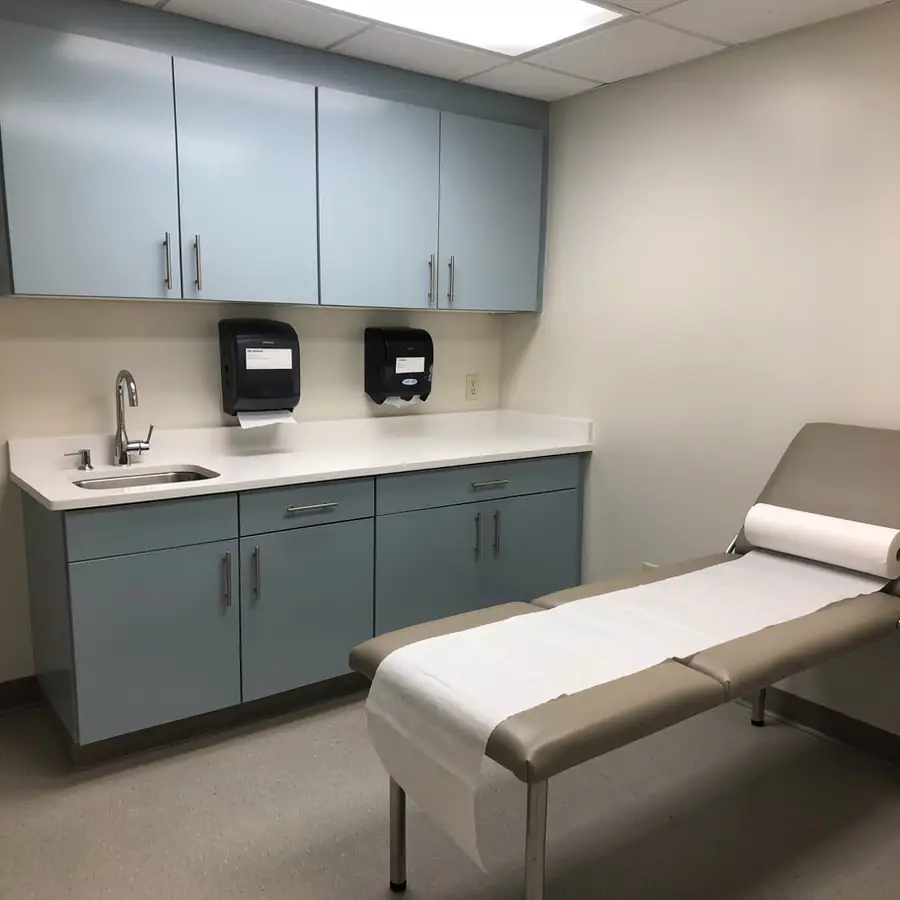
Painted exam room casework in pale blue

The chemistry problem

Why Clinic Cabinets Need a Different Coating

Clinic cabinets need a harder coating because disinfectants attack paint in a way kitchen cleaners never do. Accelerated hydrogen peroxide, quaternary ammonium (quat) and alcohol-based wipes are designed to break things down, and with enough contact time they work on the paint film too.

Most cabinet paints, including good ones, are one-component (1K) coatings that harden as the water and solvents leave. Renner 2K adds a hardener that crosslinks the resin into a tighter network, so it resists softening, dulling and staining from repeated chemical wiping much better.

  • A faintly tacky or soft feel on the doors nearest the chair
  • Dull, streaky wipe marks that will not buff out
  • Drawer front edges worn through to primer where gloved hands grab
  • A hazy, sticky film from quat residue building up over months
  • Peeling around sink bases where wipes and water collect

Bleach, acetone and abrasive pads damage even a 2K finish and are excluded from our warranty, so if your protocol calls for bleach on cabinet faces, tell us at the quote stage.

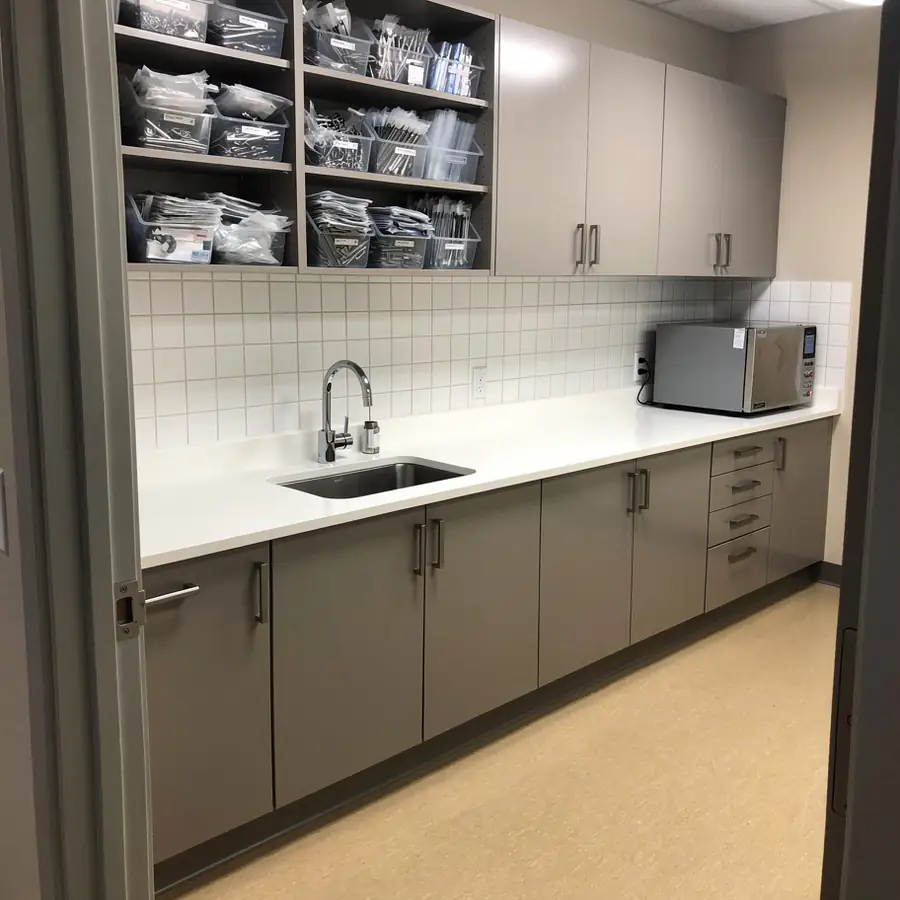
Grey painted sterilization centre cabinets

Room by room

Clinical Areas We Paint

Every room in a clinic stresses cabinets differently, so prep and sheen change between the operatory and the front desk.

Dental Operatories

Operatory casework wraps around the chair, the delivery unit, the assistant's side and the sink. Drawer fronts take gloved hands all day, so they and every door are sprayed in Renner 2K at our shop while the fixed boxes are finished in place.

The chair, light and X-ray arm are wrapped under plastic, and the room is out of service from the first evening until its doors are rehung.

  • Flat slab laminate and painted MDF fronts
  • Existing pulls refitted, or new ones installed for $4 per piece
  • Toe kicks in a darker shade to hide cart and stool scuffs
Sterilization and Lab Areas

Sterilization centres combine heat, steam and chemical splashes on one long run of cabinets. Autoclaves vent hot, wet air onto the upper doors above them, and direct steam is the one thing no coating survives for long.

We check the clearance above each unit at the quote and recommend a heat shield or more space where steam hits a door.

  • Sink runs and instrument processing counters
  • Uppers above autoclaves checked for steam exposure
  • Interiors painted for $45 to $65 per box

Exam Rooms

Exam room cabinetry is usually a sink base, a short run of uppers and a glove and supply station. The sink base is where problems hide, because the Region's hard groundwater leaves mineral spotting and slow drips swell particleboard.

Swollen or soft particleboard will not hold paint, so we repair or replace those parts first through our cabinet repair service, usually $40 to $150 per item.

Reception and Waiting Areas

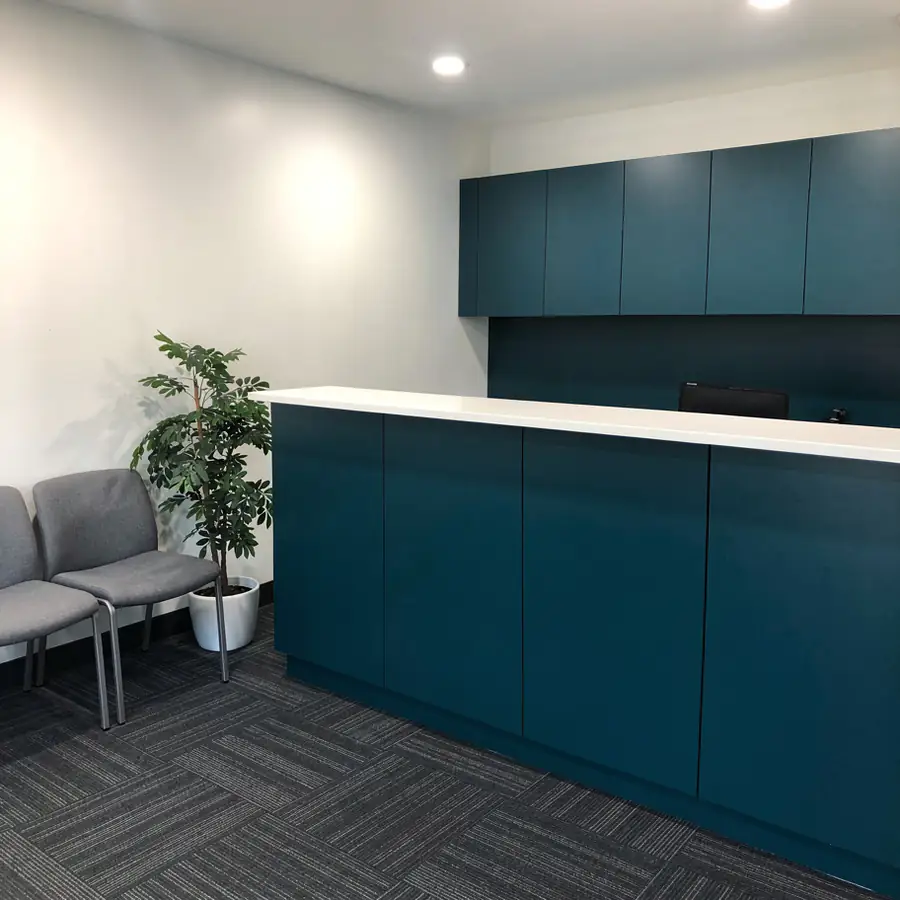
The front desk is patient-facing and now gets wiped almost as often as the operatories. Most are melamine or laminate, which we prime with INSL-X STIX bonding primer after an adhesion test patch. A new colour there refreshes the practice without touching a clinical room.

  • Check-in and check-out counters
  • Waiting-room storage and display cabinets
  • New panels from your millwork shop painted to match

Coating system

Coatings That Hold Up to Disinfectants

Disinfectant resistance comes from the topcoat and from where it is sprayed. Doors, drawer fronts and any panel we can remove get Renner 2K in our booth, while fixed boxes and face frames are sprayed in place with Benjamin Moore ADVANCE, a tough 1K waterborne alkyd that is not as chemical resistant as the 2K.

Because of that difference, we take every end panel, filler and false front that can safely come off back to the shop, so the most-wiped surfaces get the hardest finish.

Testing Against Your Clinic's Disinfectant

We test your real product, not a data sheet. Before the job we spray a sample board in your colour and sheen, let it harden, and your team wipes it with your exact disinfectant at your normal contact time every day for a week.

If the board softens, hazes or changes colour, we change the sheen or the plan before a single cabinet is touched. Accelerated hydrogen peroxide and quat wipes are what most clinics use; bleach and solvent cleaners are the ones that cause trouble.

Sheen and Cleanability

Higher sheens wipe cleaner, so we recommend satin at the least and semi-gloss for operatories and sterilization runs. Semi-gloss, at about 50% gloss, has the tightest surface and releases residue in a single pass.

Matte, around 10 to 15% gloss, looks soft in a waiting room but holds fingerprints and burnishes when it is wiped hard. Many clinics end up with semi-gloss in clinical rooms and satin at reception, in the same colour.

You can read more about the two topcoats from Renner Italia and Benjamin Moore ADVANCE.

Phased scheduling

Working Around Patients: Phased and After-Hours Scheduling

Yes, we can paint one operatory at a time. We plan the clinic as a sequence of rooms, start each one after the last patient of the day, and keep every other room running normally.

Each operatory is usually out of service for about 2 to 3 days while its doors are in our shop, much like a bathroom vanity. A long weekend lets us take several rooms at once with no lost chair time.

  1. After-Hours Assessment

    We walk the clinic after closing, count every door and drawer front by room, check sink bases and autoclave clearances, and agree on the order of rooms with your office manager.

  2. Sample Board and Disinfectant Test

    A sprayed sample board in your colour and sheen goes to the clinic for a week of wiping with your own product before the first room is booked.

  3. Room One: Evening Removal

    After the last patient, we wrap the chair and equipment, mask counters and sinks, label every part and take the doors and drawer fronts to our shop.

  4. Booth and Sunday Spraying

    Doors are sprayed with Renner 2K in the booth, while the boxes are prepped and sprayed on site in the evening or on Sunday inside zip walls.

  5. Reinstall and Hand Back

    Doors are rehung no sooner than 24 to 48 hours after spraying, we clean up, and your team does its normal room clean before patients return.

  6. The Next Room

    We repeat the cycle room by room, so most clinics never have more than one operatory closed at once.

Infection control

Dust, Odour and Air Quality Controls

We keep dust and odour out of patient areas with sealed work zones, HEPA-extracted sanding and waterborne coatings. The goal is that a patient in the next room never knows we were there.

Sealed Work Zones

Plastic zip walls close the room off from floor to ceiling, Ram Board covers the floor, and chairs, delivery units and computers are wrapped and taped.

HEPA Dust Extraction

Every sander is a Festool random orbital connected to a HEPA dust extractor, so dust is captured at the sanding pad instead of drifting into hallways and return vents.

Filtered Negative Air

A negative-air fan with a filter pulls air out of the work zone and vents it through a window, so spray mist and odour go outside rather than into the waiting room.

Low-VOC Waterborne Coatings

All of our topcoats are waterborne and meet the federal VOC limits in SOR/2009-264, so odour is low and fades quickly.

Documentation

Paperwork for Clinics and Property Managers

We send a certificate of insurance, a WSIB clearance certificate and product safety data sheets before the first evening on site. Medical buildings and their property managers usually want all three, and your infection prevention and control lead may want the data sheets too.

None of it costs extra, and most of it reaches you the same day you ask.

  • Certificate of insurance from our commercial general liability policy, naming the landlord or property manager
  • Current WSIB clearance certificate, explained in the WSIB clearance FAQ
  • Safety data sheets for the degreaser, primers and topcoats used in your clinic
  • An itemized fixed quote broken down by room, so each phase can be approved on its own
  • A care sheet with the colour, sheen and product for every room, plus the 1-year labour warranty
Teal painted medical clinic reception desk

Pricing

Clinic Cabinet Painting Prices

Clinic cabinet painting is priced per piece, room by room: about $110 to $150 per door and $75 to $95 per drawer front, both sides sprayed, before HST. Operatories are drawer-heavy, so a typical one lands between about $1,400 and $1,850.

A phased clinic is simply a set of small jobs on one quote, with each room priced on its own line.

Drawer bank in painted dental operatory
RoomTypical piecesTypical range before HST
Dental operatory6 doors, 10 drawer fronts$1,410 to $1,850
Exam room with sink base5 doors, 3 drawer fronts$775 to $1,035
Sterilization centre run10 doors, 8 drawer fronts$1,700 to $2,260
Reception desk and waiting-room storage4 doors, 2 drawer fronts, 4 full-height panels$1,230 to $1,670

Extras are listed separately: interiors at $45 to $65 per box, Blum soft-close hinges at $14 each, new pulls installed at $4 per piece and repairs quoted per item. The minimum job is $650, and our full cabinet painting price list has every rate.

Why Kitchener Elite

Why Clinics Choose Kitchener Elite

Clinics choose us for the finish and the scheduling, and they stay with us because each job runs like a procedure: planned, documented and cleaned up.

One Lead Painter, Start to Finish

The same lead painter handles every room of a phased job, so the finish in operatory six matches operatory one and your office manager deals with one person.

A Warranty in Writing

Our 1-year labour warranty covers peeling, flaking, bubbling and adhesion failure from our prep or application, and it is written on every quote and invoice.

Not a clinic? Our office cabinet painting service looks after home and business offices, and commercial cabinet and millwork painting covers stores, restaurants and rental units.

Questions

Dental and Medical Office FAQs

Clinic owners and office managers usually want three answers first: can the clinic stay open, when can we disinfect, and will anyone smell paint.

Can you paint one operatory at a time?

Yes. We phase the work room by room, starting each one after the last patient, and each operatory is usually back in service within 2 to 3 days.

How soon can we disinfect painted surfaces?

You can wipe gently as soon as the doors are rehung, at least 24 to 48 hours after spraying. For the first 7 days, wipe with a soft cloth or a damp disinfectant wipe without scrubbing or letting product pool, then return to your normal routine; the finish reaches full hardness at about 30 days.

Will there be odour during patient hours?

Usually not. Doors are sprayed in our shop, on-site spraying happens after hours with low-odour waterborne coatings and a filtered fan venting outside, and windowless rooms are booked for weekends.

Will hospital-grade wipes damage the new finish?

A cured Renner 2K finish resists hydrogen peroxide, quat and alcohol wipes far better than 1K cabinet paint, and we prove it on a sample board with your own product first. Bleach, acetone and abrasive pads are the exceptions and are not covered by our warranty.

Do you work at clinics outside Kitchener?

Yes. We paint clinic casework in Waterloo, Cambridge and Guelph, with no travel charge anywhere in Waterloo Region or Guelph.

Free assessment

Book a Clinic Assessment

Book an after-hours walkthrough or send photos of each room, and we will reply with a fixed written quote broken down by operatory within 1 business day. The sample board and disinfectant test can start right away.

  • Evening and Sunday assessments, so no patient time is lost
  • Renner 2K on every door and drawer front
  • Certificate of insurance, WSIB clearance and safety data sheets on request
  • One room at a time, or several over a long weekend
Shop
330 Gage Ave, Kitchener, ON N2M 5C6
Monday to Saturday
7:00 am to 9:30 pm
Sunday
9:00 am to 9:00 pm
Call 519-555-0123Free quote