Built-In TV Walls
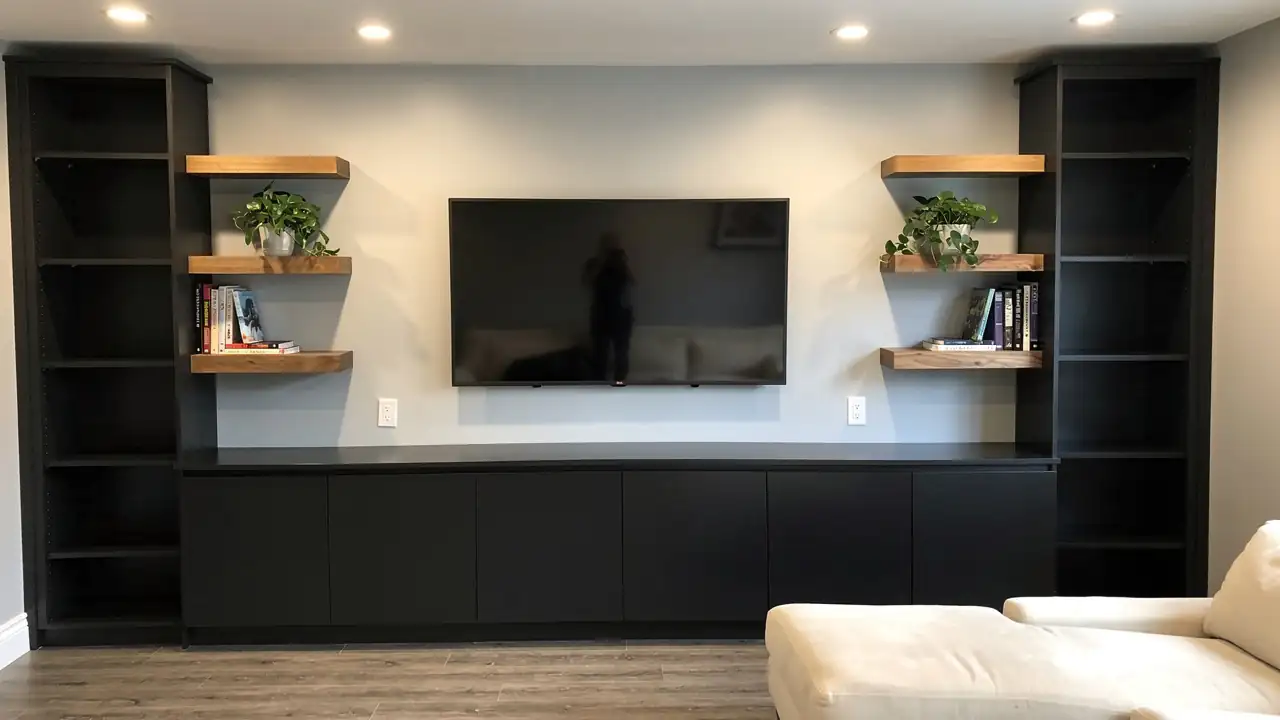
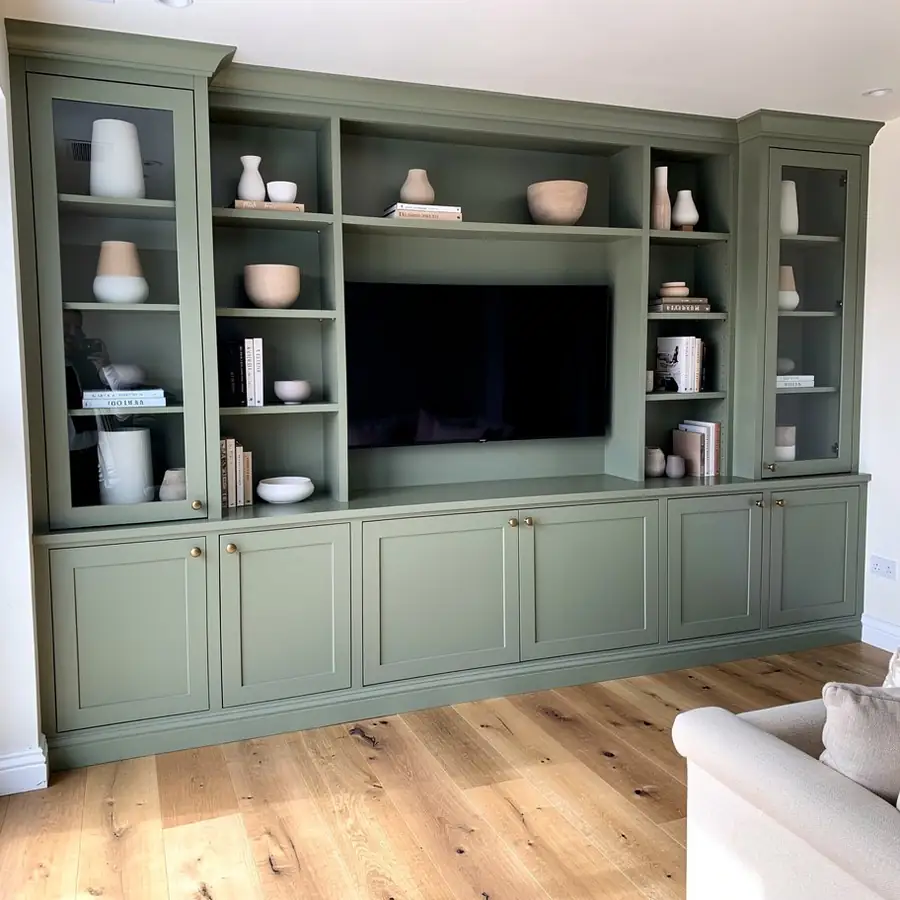
Floor-to-ceiling units with a TV opening, side towers and a bridge cabinet across the top. They are fixed to the wall, so the boxes are sprayed in place and the doors go to our shop.
TV walls and media units
Big wood entertainment units from the 1990s and 2000s are usually solid, well built and the right size for the room; they just look dated. Kitchener Elite Cabinet Painting & Refinishing paints entertainment centres, built-in TV walls, floating media consoles and AV cabinets for homeowners across Kitchener, Cambridge and the rest of Waterloo Region.
Media walls bring their own set of problems: a mounted TV, cables threaded through grommets, receivers and game consoles that need airflow, and nearly always a big colour change from dark cherry or honey oak to something lighter. We plan for each of those before the first door comes off.
In 16 years and more than 1,700 jobs we have seen how much life is left in most of these units. A painted media wall usually takes 2 to 4 days, costs $1,200 to $3,800 before HST and keeps a perfectly good cabinet out of landfill.
What we paint
Any wood, MDF or sound laminate media unit can be painted, whether it is built into the wall or stands on its own. These are the four kinds we see most in Waterloo Region homes.
Floor-to-ceiling units with a TV opening, side towers and a bridge cabinet across the top. They are fixed to the wall, so the boxes are sprayed in place and the doors go to our shop.
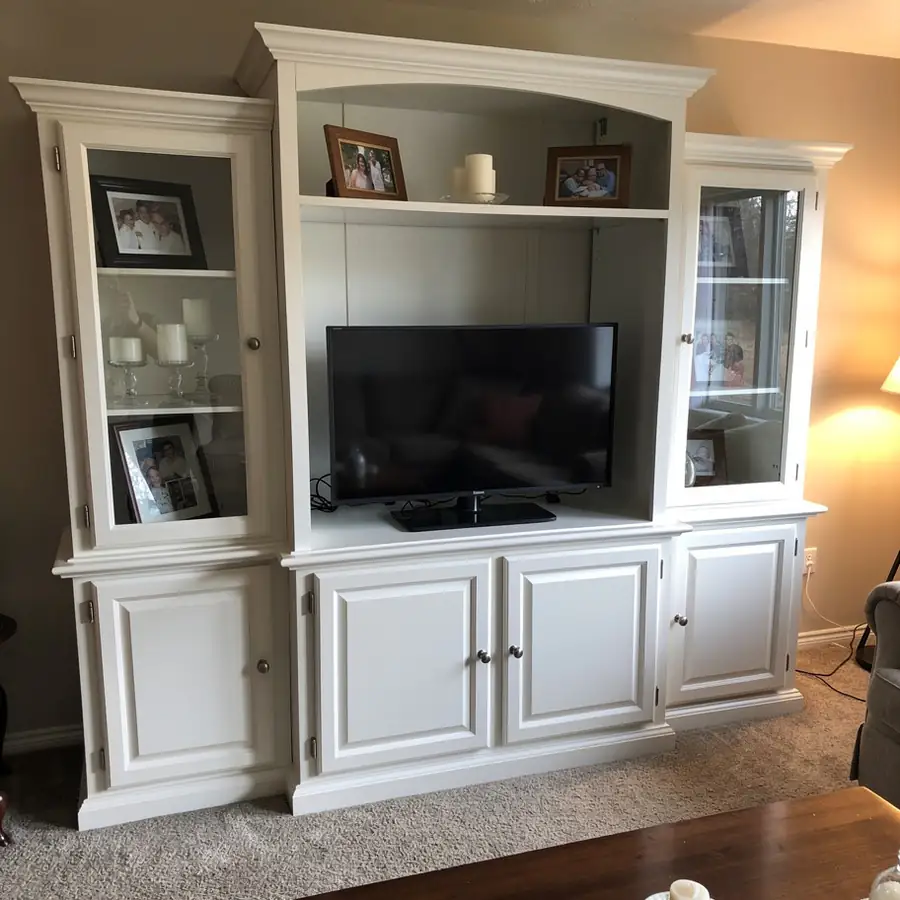
Large wall units and armoire-style cabinets built in the tube TV era. Doors, drawers and removable shelves are shop sprayed, and the carcass is painted where it stands.
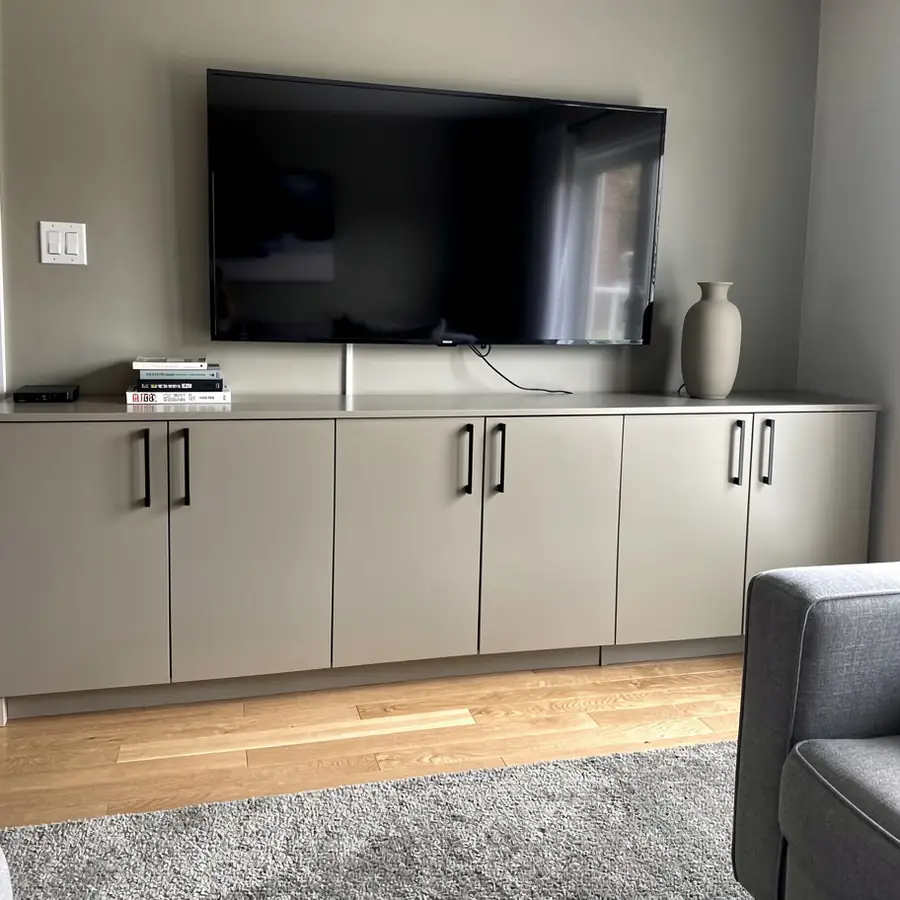
Wall-hung consoles under the TV, often with slab doors and push-to-open latches. We take care to keep the latches and the wall cleat free of paint.
Closed cabinets that hold receivers, consoles, routers and cable boxes. Their vent cut-outs and back openings stay clear so the equipment can still breathe.
Paint or replace
If the boxes are solid and the layout still fits your TV, painting is almost always the smarter choice. Replacing a built-in media wall means a cabinetmaker, a new design, removing the old unit and repairing the drywall and flooring behind it.
Painting keeps everything you already paid for and changes the part you see. It suits most units that tick these boxes:
Replacement makes more sense when the unit was built for a 32 in tube TV and the cavity is useless, or when particleboard has swollen from a plant or aquarium leak. In those cases we will tell you so rather than sell you a paint job.
TVs, cables and lights
Most of the extra time on a media wall goes into what is attached to it rather than the cabinets themselves. We plan these details at the estimate, so day 1 starts with a clear wall.
Ask your TV installer or a family member to take down the TV and disconnect the electronics before we arrive. We do not unmount screens or do any electrical work.
With the TV off the wall, we mask the mount bracket and the in-wall cable plate so they are ready to go back up. Plastic cable grommets are pulled out, the holes are painted and the grommets go back in afterwards, or are swapped for black or white ones to suit the new colour.
In-wall and in-cabinet speaker grilles are masked, never painted, so the sound is not muffled.
Glass doors on side towers go to the shop, where the glass is masked on both faces. Open shelves are painted on every visible face, and the back panels behind them can be painted in a second colour for depth.
Stick-on LED tape inside shelves should come out before day 1, since the adhesive will not hold on a fresh finish. Outlet cover plates are removed and the openings masked, and any outlet that needs moving is a job for a licensed electrician before we start.
Dark to light
A dark cherry or espresso unit can be painted white, but it needs a stain-blocking primer and sometimes a third topcoat. Skipping the primer is the most common reason a white media wall turns yellow-brown in patches a few weeks later.
Every colour change starts with a sample door sprayed in your chosen colour and sheen, so you see it next to the wall before we commit.
| Starting finish | Primer | What else to expect |
|---|---|---|
| Dark cherry or espresso stain | Zinsser B-I-N shellac-based primer | White over dark may need a third topcoat, included in the price |
| Honey or golden oak | Zinsser B-I-N to block tannin bleed | Open grain shows through; Aqua Coat grain filling is $35 per door face |
| Black or wood-look laminate | INSL-X STIX bonding primer | Adhesion test patch first |
| Previously painted unit | INSL-X STIX after a full scuff sand | Peeling paint is sanded back with 120 to 150 grit |
Oak units take the most prep, and our painting oak cabinets page explains grain filling and tannin bleed in more depth.
Colour and sheen
The best finish for a media wall is the one that does not compete with the screen. Lower sheens and deeper colours cut glare from lamps and windows, while a contrasting back panel adds depth without distraction.
Matte at about 10 to 15% gloss reflects far less light than satin, so lamps and windows do not bounce off the cabinets into your eyes. It is the sheen we suggest for the bay directly around the TV.
Charcoals and soft blacks such as Benjamin Moore Kendall Charcoal (HC-166) or Sherwin-Williams Tricorn Black (SW 6258) make a black screen blend into the wall when it is off.
Painting the shelf backs a deeper or lighter colour than the cabinet frames gives open towers depth. A second colour is a $250 flat add-on.
If the room is dark, a warm white such as Benjamin Moore Simply White (OC-117) in satin lifts the whole wall. Our cabinet colour guide has more options.
How it works
A built-in media wall takes 2 to 4 days, almost all of it finished in place in your family room. Freestanding units follow the same steps, with the doors, drawers and removable shelves sprayed in our shop.
If a smaller freestanding piece can be moved safely, ask us at the estimate whether the whole unit can come to the shop. Our cabinet painting process explains each stage in full.
With the TV and electronics already removed, we lay Ram Board, set up zip walls and a filtered negative-air fan, and label every door, drawer and shelf.
The unit is degreased twice to remove years of furniture polish and silicone, which is the number one cause of peeling. It is then sanded, filled and primed for its material.
Doors get two coats of Renner 2K in our booth. Boxes and shelves get Benjamin Moore ADVANCE on site, matched in colour and sheen.
Doors and grommets go back, hinges are adjusted and the wall is ready for your TV installer. You get a care sheet with the equipment timings.
Pricing
Painting an entertainment centre or media wall costs $1,200 to $3,800 before HST. A low floating console with a few doors can come in at our $650 minimum, while a floor-to-ceiling wall with glass towers sits at the top of the range.
White over dark wood, oak grain filling and glass doors add time, and the quote spells out each one. See our cabinet painting price guide for how pieces are counted.
FAQ
These are the questions that come up at almost every media wall estimate.
No. Please have the TV taken down and the electronics disconnected before day 1, by your installer or a family member. We mask the mount and cables and leave everything ready to reconnect.
Yes, if the laminate is fully bonded with no peeling or swelling. We scuff sand, apply INSL-X STIX bonding primer and test a patch before painting the whole unit.
Yes. Back panels, shelf backs and the TV niche can all be painted in a second colour for a flat $250, which works well for open towers and glass-front cabinets.
Sometimes, if the TV is mounted well clear of the cabinets. We wrap it in plastic and spray around it, but the result is always cleaner with the screen off the wall.
Light items can go back at the walkthrough. Heavy equipment should wait 7 days, and closed AV cabinets should stay open while equipment runs for the first month.
Free quote
Send us a photo of the whole unit with the TV in place, plus a close-up of one door, and we will send a fixed written quote within 1 business day. Let us know the current wood or laminate finish and the colour you have in mind.