Options in detail
Choosing Your Refinishing Option
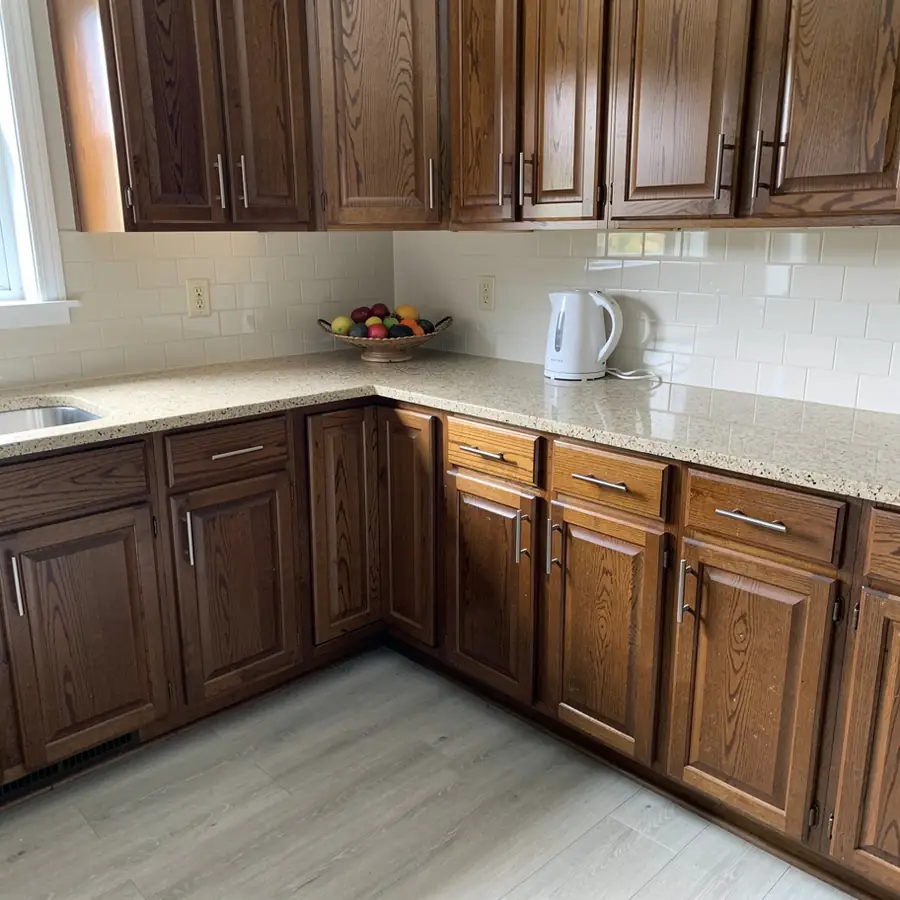
The right option starts with what is on your doors today: solid wood with a stain, painted wood, or a manufactured surface like melamine. Stain and clear coat need real wood, while a respray works on almost anything that is sound.
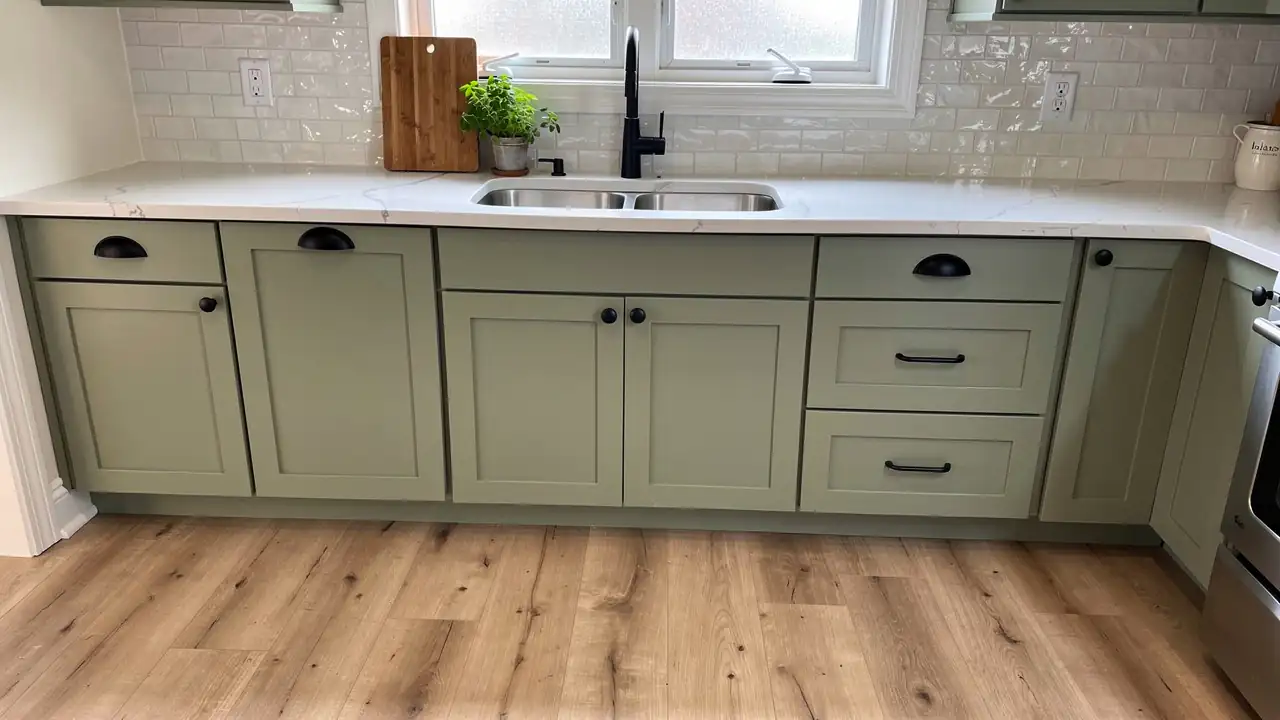
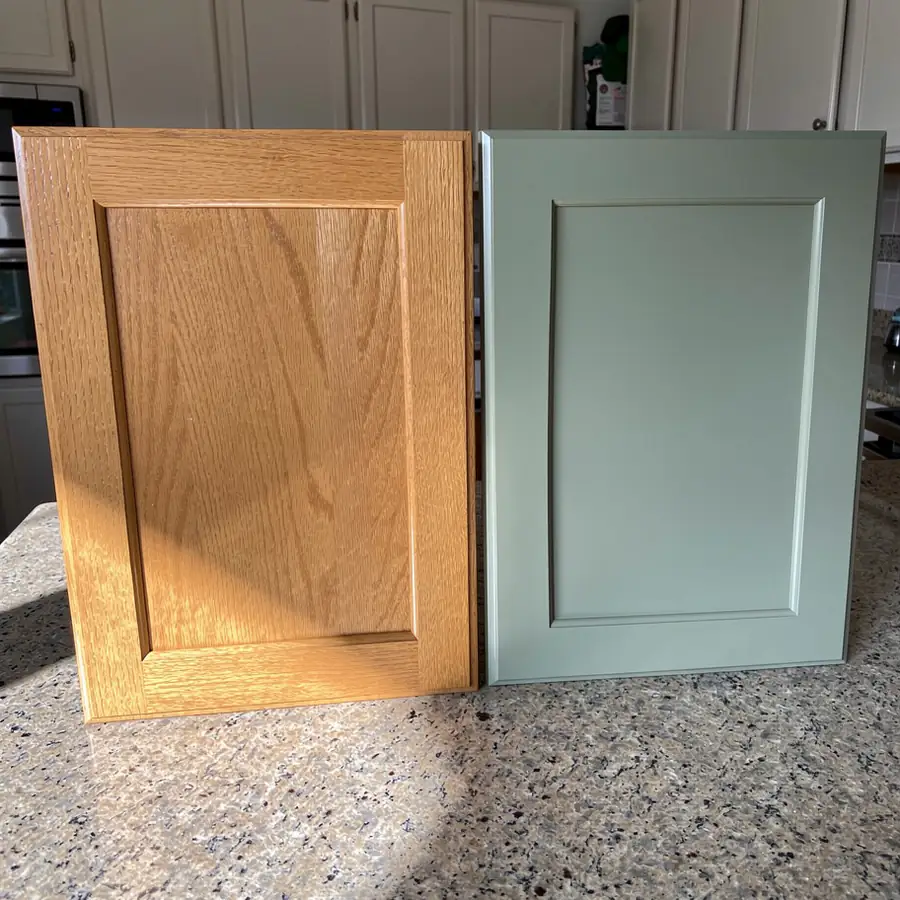
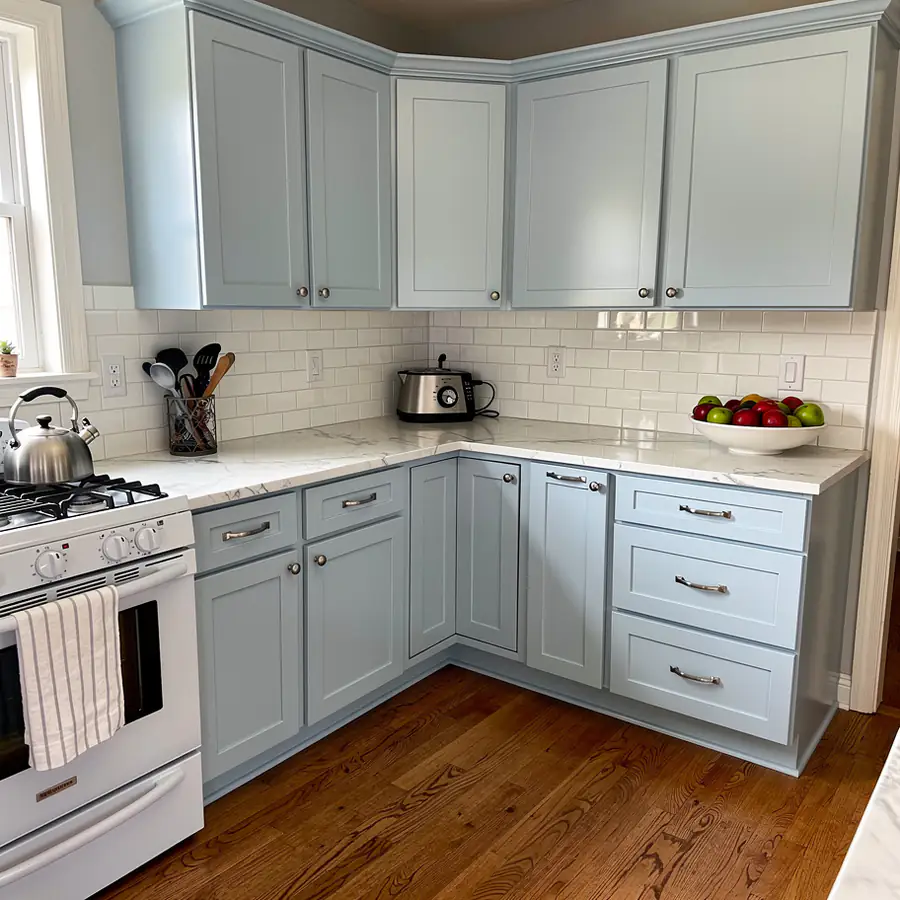
Respraying in a New Colour
A respray is the most forgiving option because primer hides old stain, mismatched doors and filled dents. We prime with INSL-X STIX on glossy and manufactured finishes, or Zinsser B-I-N on oak and cherry to stop tannin bleed, then spray two topcoats.
Going from dark wood to white sometimes needs a third topcoat, which is included in the price. Oak grain will still show as texture unless you add grain filling at $35 per door or drawer face.
Restaining Wood Cabinets Darker
Stain soaks into bare wood, so the old lacquer or varnish has to come off completely before a new colour can take. That stripping is the slowest, messiest part of refinishing, and it makes a restain cost more than a respray for the same kitchen.
Oak takes a darker stain evenly. Maple, birch and cherry tend to blotch, so we finish a sample before you commit.
Clear-Coat Refresh for Worn Finishes
A refresh keeps your current colour and rebuilds the protective layer. We degrease every door twice with Krud Kutter, scuff with 220 grit, touch up bare edges and spray a new clear topcoat.
It only works when the stain underneath is intact and the old finish accepts a new coat, so we test a door first. Silicone furniture polish is the usual reason a new clear coat refuses to stick.
Glazed, Antiqued and Distressed Finishes
Glazed and distressed finishes were popular on 2000s maple and cherry kitchens, and most people who call us about them want them gone. Once primed, a solid colour respray hides glaze in the corners and sanded-through edges completely.
If you would like a glazed or aged look instead, mention it with your photos and we will tell you plainly whether it suits your doors.