Price factors
What Moves Your Price Up or Down
Four things decide where your kitchen lands in its range: the pieces, the materials, the cleanup they need and the colour change. Access matters too, since a third-floor walk-up or a condo elevator adds carrying time.
Door Count and Door Style
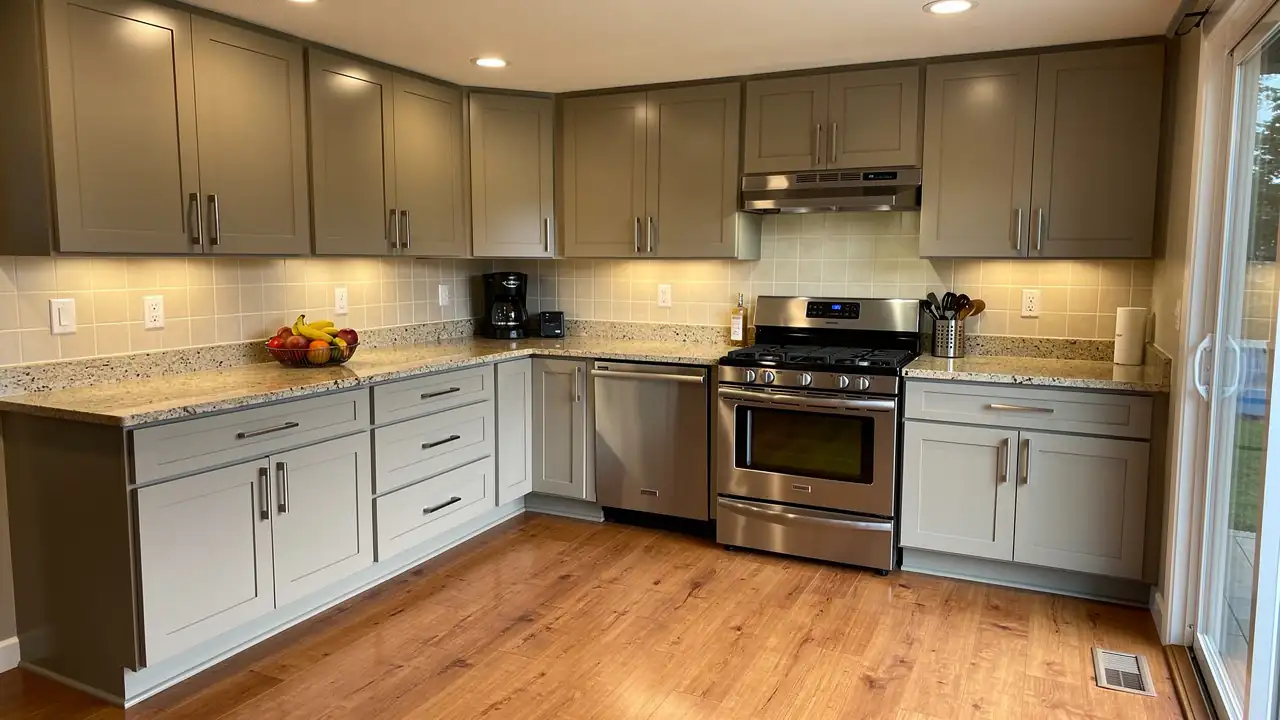
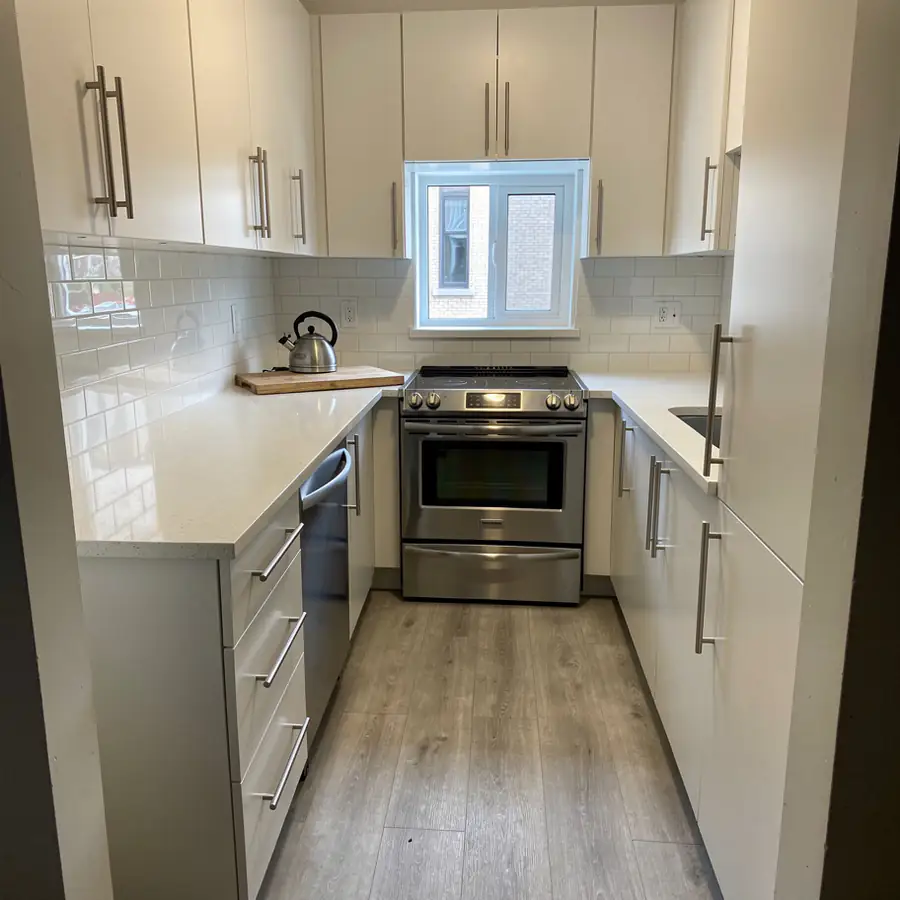
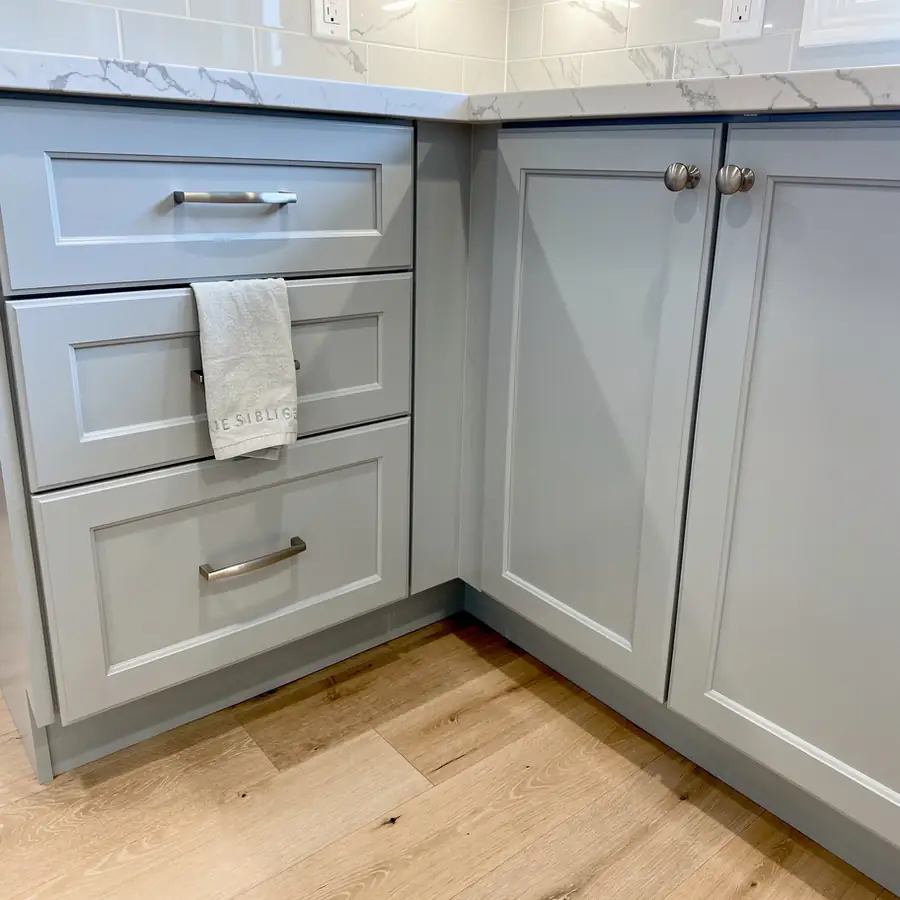
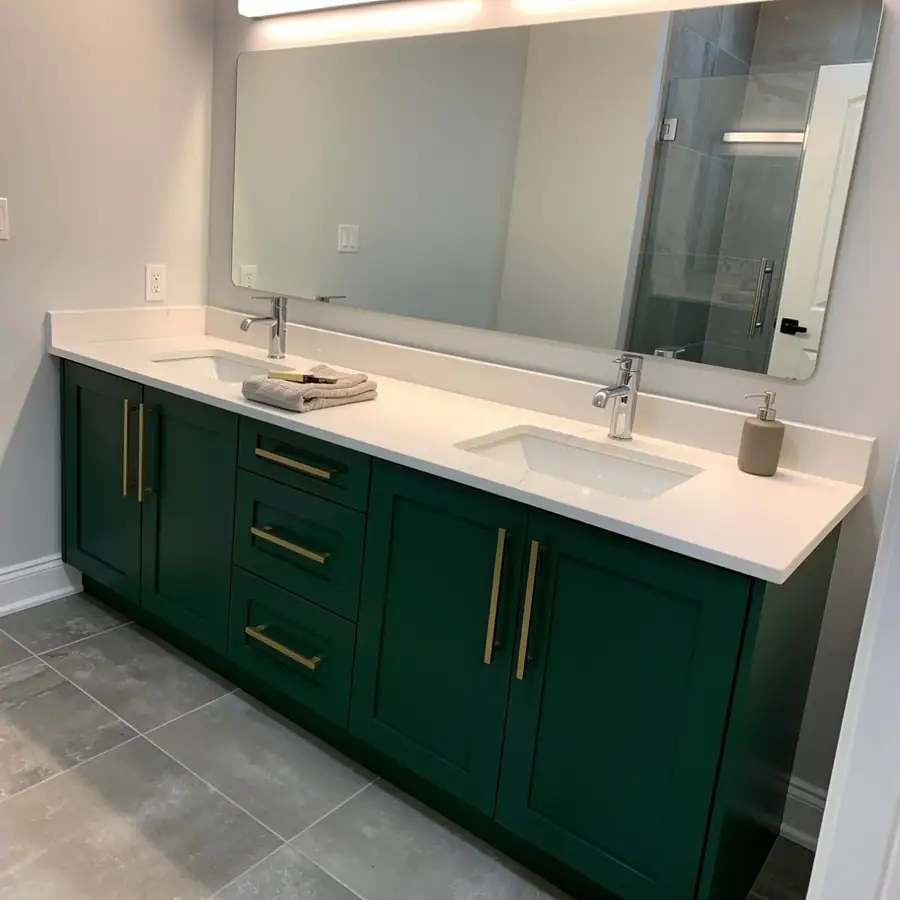
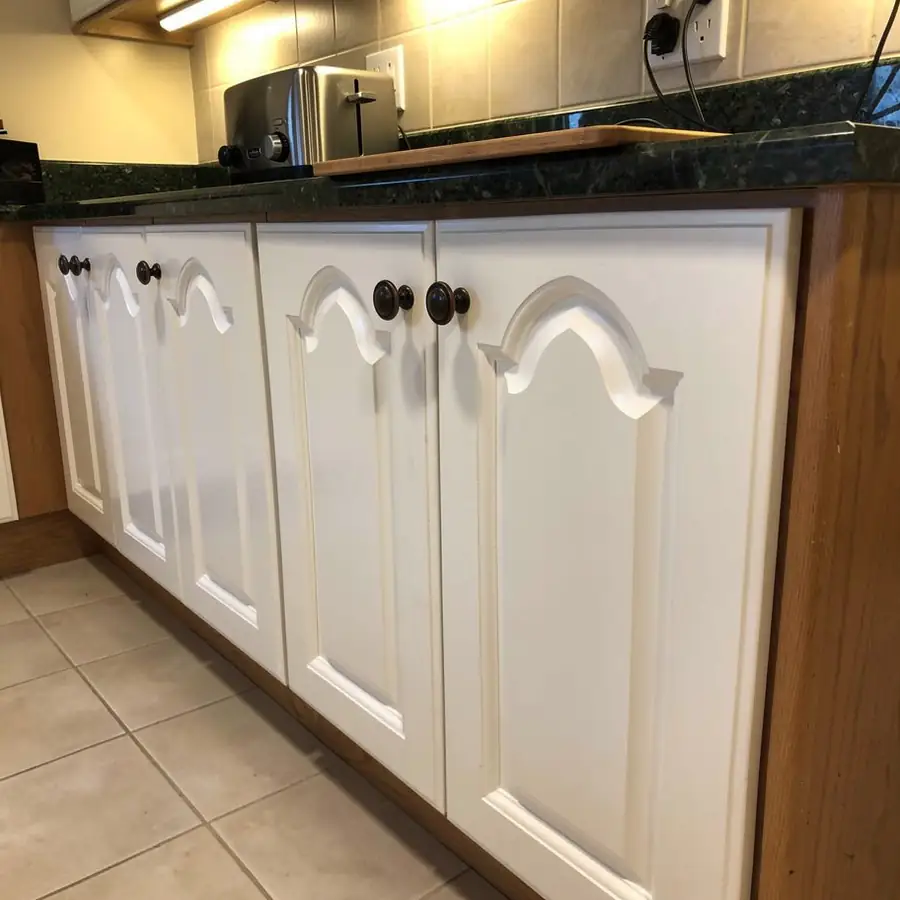
Piece count sets the base price, and door style moves it within the range. A flat slab sprays in one clean pass per side, a Shaker adds four inside corners, and a raised panel or cathedral arch has deep profiles that need hand-sanding sponges and extra passes to coat evenly without runs.
Cabinet Material and Condition
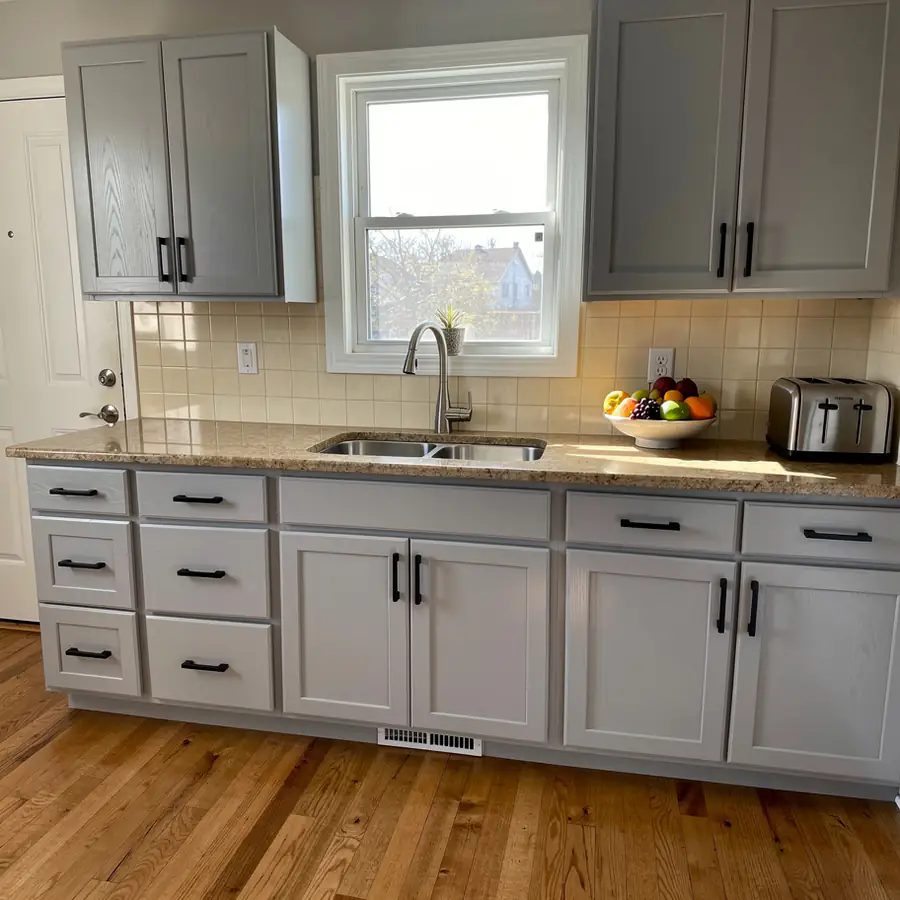
Oak needs Zinsser B-I-N to stop tannin bleed, and grain filling is an extra if you want a smoother face. Melamine and laminate need a scuff sand and STIX bonding primer, and our guide to which cabinet materials can be painted covers each one.
Grease, Wax and Old DIY Paint
Years of cooking grease and furniture polish like Pledge leave a film that paint won't stick to, so heavy buildup takes longer to cut. Failed DIY paint is sanded back to a sound layer at 120 to 150 grit, which adds hours, so mention it up front.
Colour Change and Number of Colours
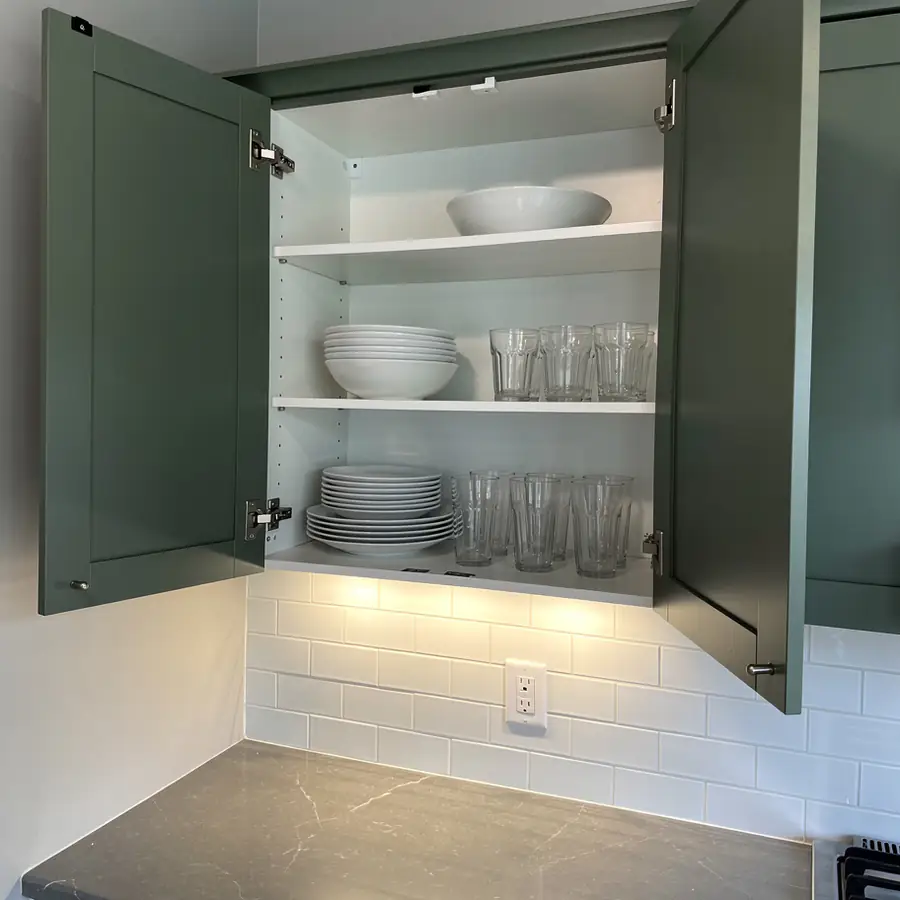
White over dark wood sometimes needs a third topcoat, which is built into the quote and pushes the job toward the top of its range. A second colour adds a flat $250 for the extra spray batch and colour match.