Refined over 1,700+ jobs
Our Cabinet Painting Process in Kitchener, Step by Step
How long a painted cabinet lasts is decided mostly before any colour goes on. At Kitchener Elite Cabinet Painting & Refinishing we've refined our cabinet painting process over 16 years and more than 1,700 kitchens, vanities and built-ins across Waterloo Region, and every job follows the same sequence.
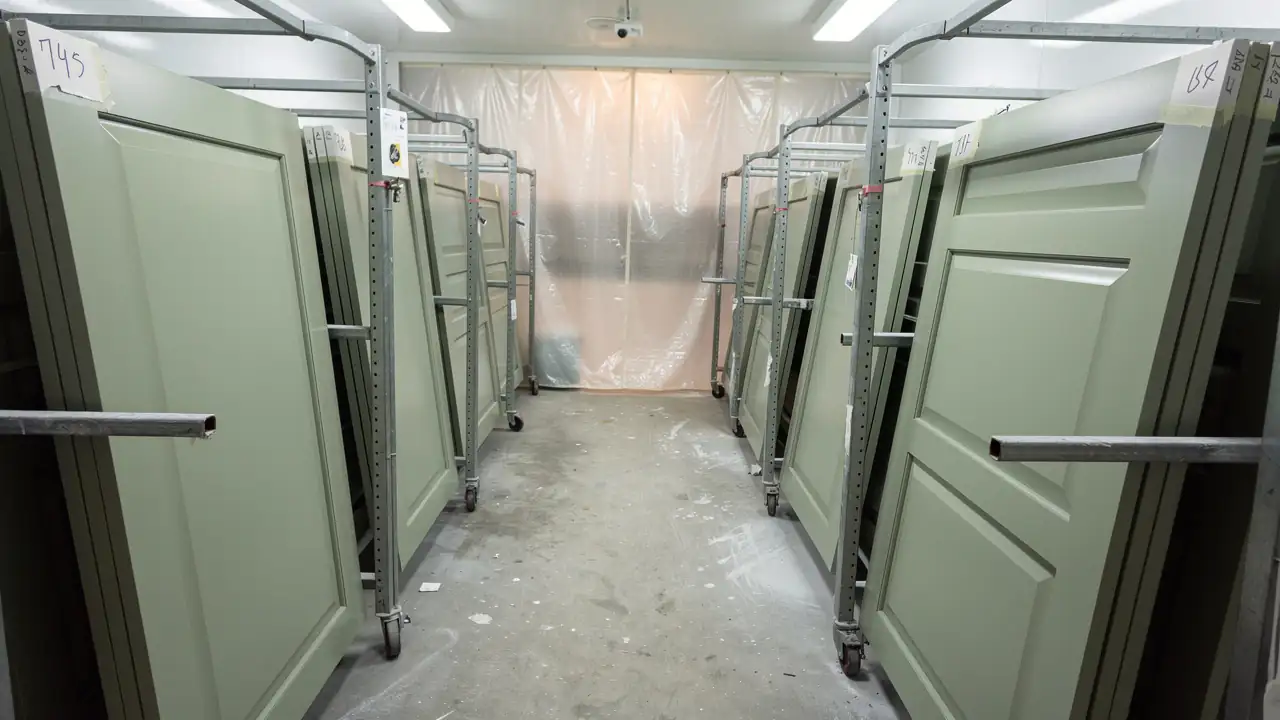
Doors and drawer fronts travel to our Kitchener spray booth for a two-component finish, while the boxes are prepped and sprayed in your home inside sealed zip walls. That split keeps your fridge, sink and stove working on all but about one day of a typical 5 to 7 day kitchen.
The steps that matter most are the ones nobody notices afterwards: two rounds of degreaser, a primer picked for your cabinet material and a cure that runs about 30 days.
- Written fixed quote
- WSIB covered crew
- 1-year labour warranty
Homeowner prep
Before We Start: Getting Your Home Ready
You only need to do two things before day 1: empty the cabinets and clear the counters. We handle the protection, removal and setup.
- Empty every cabinet and drawer we're painting
- Clear the counters, including small appliances
- Set up a small kitchen kit in another room: plates, cutlery, a kettle and a couple of pots
- Keep pets out of the work area on spray day
- Keep the house at 15°C or warmer
- Tell us about any past DIY paint, and whether the house was built before 1960
Do You Need to Empty Your Cabinets?
Yes, every cabinet and drawer in the room we're painting should be empty when we arrive, including the one above the fridge. Sanding dust finds its way into open boxes, and we need clear shelves to work around hinges and paint any interiors you've ordered.
Where We Set Up and What Stays Usable
We need a window near the kitchen for our filtered negative-air fan, a standard outlet and a clear path from the door. Floors get Ram Board, counters and appliances are covered, and the fridge, sink and stove stay in use except on the day the boxes are sprayed.
Step by step
Our Cabinet Painting Process in Eight Steps
Every job, from one vanity to a 50-piece kitchen, goes through the same eight steps. Each one sets up the next, and skipping any of them shows up as peeling a few months later.
Free Quote From Photos or a Visit
Send photos and a door count, book a video call, or have us visit on an evening or a Sunday. You get a fixed, itemized written price within 1 business day of the photos.
Colour Consult and Sample Door
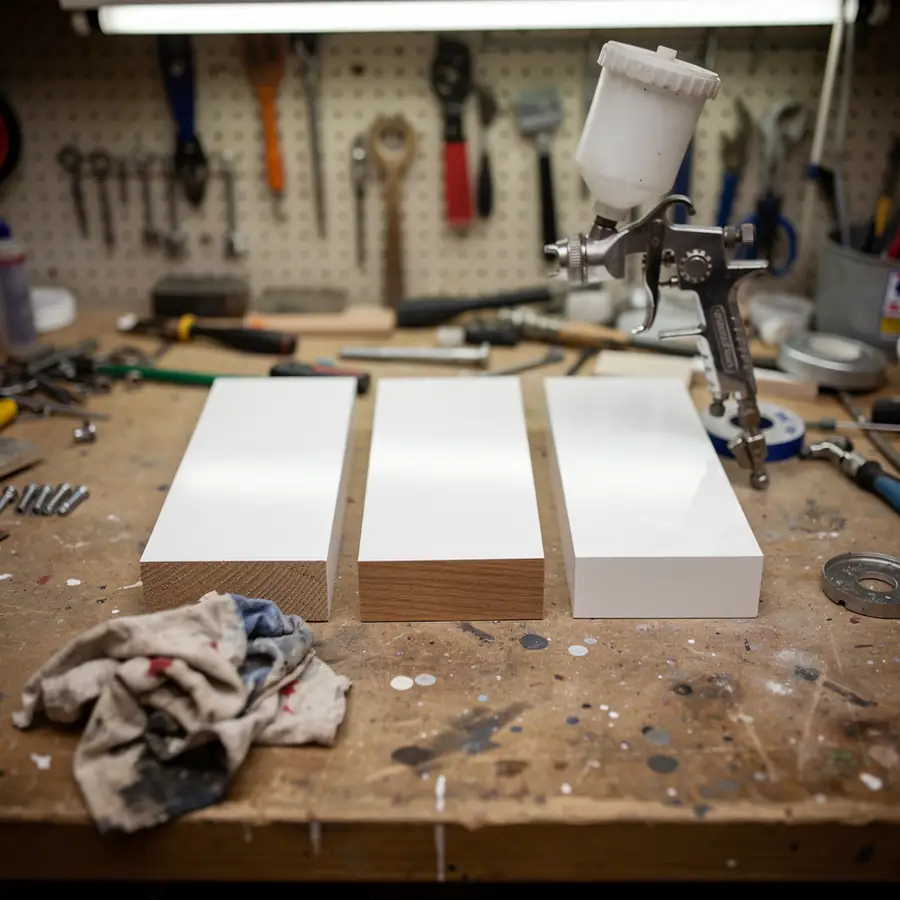
We help you settle the colour and sheen, then spray a sample door or board in that exact finish. You check it against your counters and floor in your own light before anything else is painted.
Day 1: Protect, Label and Remove
Ram Board goes on the floors, counters and appliances are covered, and plastic zip walls with a filtered negative-air fan seal off the room. Every door, drawer front and hinge gets a matching number, hardware is bagged by location, and the doors go to our shop.
Degrease, Sand, Fill and Caulk
Every door and box is degreased twice and sanded with dust extraction. Gouges and old hardware holes get two-part wood filler, and face-frame seams get paintable latex caulk.
If you're switching to new pulls or soft-close hinges, old holes are filled and new ones drilled at this stage.
Prime to Suit the Material
Slick surfaces get INSL-X STIX bonding primer, and oak, cherry, knots and water stains get Zinsser B-I-N. The primer is the layer that decides whether the topcoat stays put.
Spray the Doors in Our Shop
Doors and drawer fronts get two coats of Renner 2K waterborne polyurethane in our booth on Gage Avenue, sanded with 320 grit between coats. They're racked to cure for at least 24 to 48 hours before they come home.
Spray the Boxes in Your Home
Boxes, face frames, end panels, crown and valance are sprayed in place with a fine-finish HVLP gun inside the zip walls. This is the one day the kitchen is off limits.
Reinstall, Adjust and Walk Through
Doors go back in numbered order, hinges are adjusted so the gaps line up, new hardware is fitted and touch-ups are done. We walk the room with you, clear the punch list and leave a written care sheet with your warranty.
Surface prep
Degreasing and Sanding: The Prep That Decides Adhesion
Most peeling cabinet paint fails at the bottom layer, not the top: it was stuck to grease, not to the cabinet. That's why degreasing gets more time on our schedule than spraying does.
- Two rounds of Krud Kutter Original, a water-based, biodegradable degreaser, on every door, drawer front and box
- A clean-water wipe after each round so no residue sits under the primer
- Extra time around the range hood, the handle areas and anywhere furniture polish like Pledge has left silicone
- 220 grit scuff sanding on sound finishes; 120 to 150 grit where the old finish is failing
- Hand-sanding sponges in Shaker corners and raised-panel profiles
- Festool random orbital sanders with HEPA dust extraction, so the dust goes into the vacuum instead of your house
If your home was built before 1960, we test for lead-based paint before any sanding, since older layers on cabinets and trim can contain it. Health Canada explains the risk in its guidance on lead-based paint in the home.
Primer by material
Primer Matched to Your Cabinet Material
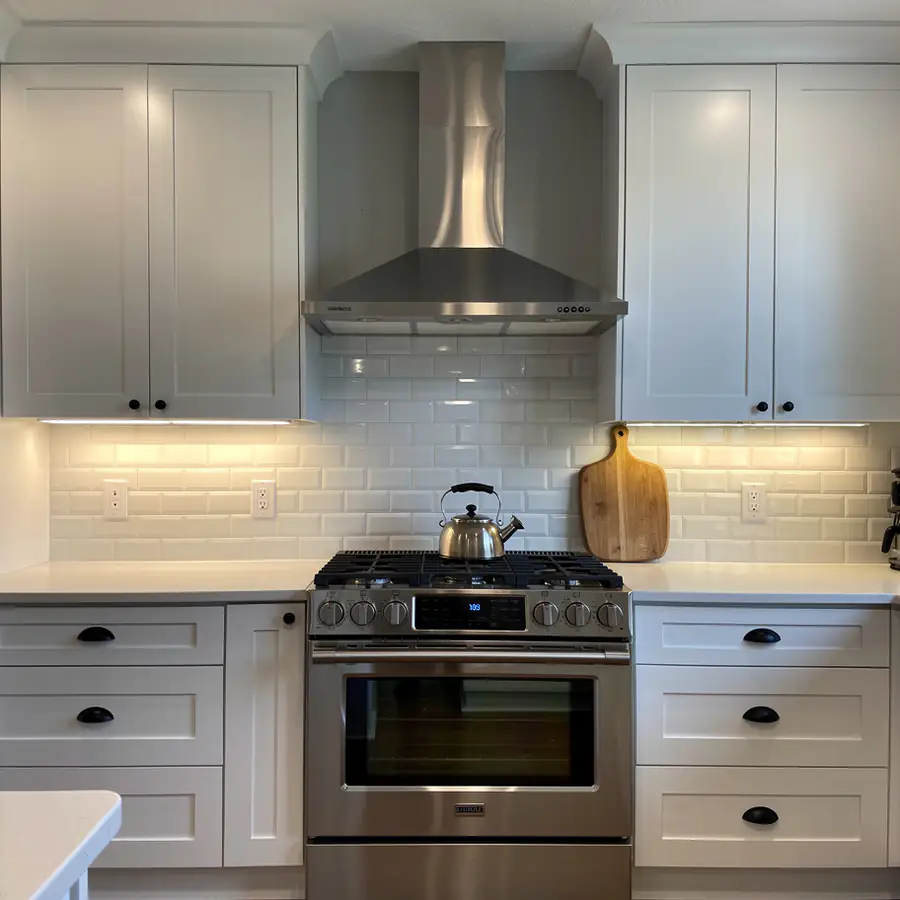
The right primer depends on what your cabinets are made of, because each surface fails in its own way. Oak bleeds tannin, melamine resists grip, and raw MDF edges soak up coating like a sponge.
| Cabinet material | Primer we use | Why |
|---|---|---|
| Oak and cherry | Zinsser B-I-N shellac-based primer | Stops tannin bleed, the yellow-brown stain that comes through water-based paint |
| Knots and water stains | Zinsser B-I-N | Seals marks that would ghost through a light colour |
| Melamine and laminate | INSL-X STIX waterborne bonding primer | Grips slick surfaces after a scuff sand; we test a patch first |
| Glossy factory finishes and painted cabinets | INSL-X STIX | Bonds to the old coating once it's cleaned and scuffed; failing paint is sanded back first |
| MDF and new unfinished doors | Primer on the edges twice, then a full coat | MDF edges are porous and turn fuzzy if they're sealed only once |
| Thermofoil, fully bonded only | Chosen after a test patch | Lifting or heat-damaged foil can't be saved; new MDF doors are the better fix |
Oak grain still shows through paint unless it's filled. Aqua Coat clear grain filler is an option for a smoother face, and it reduces the texture a lot but never completely.
Cure and care
Cure Times: When You Can Use and Clean Your Cabinets
Painted cabinets are dry to the touch in about an hour but take around 30 days to reach full hardness. Treat them gently for the first week and they'll stay smooth for years.
- Clean with a soft cloth and mild dish soap in warm water, then dry
- Skip abrasive pads, melamine sponges, acetone and bleach
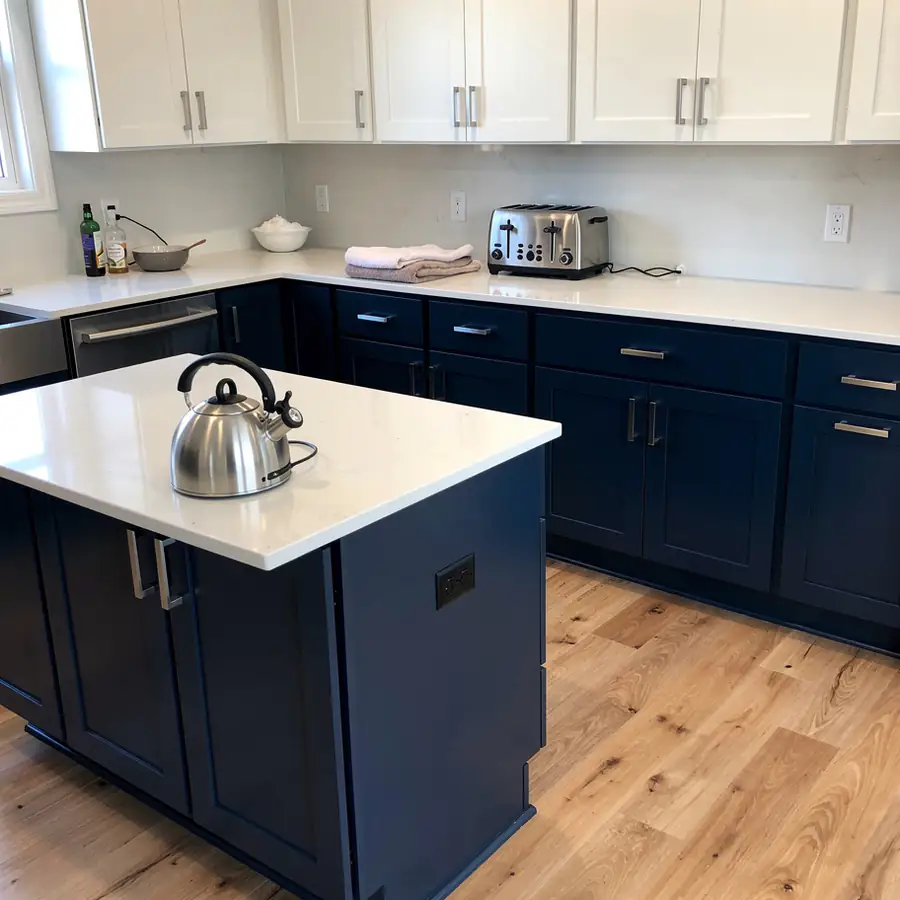
- Move kettles, toasters and air fryers so steam and heat don't vent onto doors
- Wipe water off sink bases and vanities before hard Region of Waterloo water dries into spots
| Stage | When | What it means for you |
|---|---|---|
| Dry to touch | About 1 hour | Dust no longer sticks, but the film is still soft |
| Doors rehung | After at least 24 to 48 hours in the shop | Doors arrive hard enough to handle and hang |
| Gentle cleaning only | First 7 days | A soft, barely damp cloth; no sprays or scrubbing |
| Stick-on bumpers | After 14 days | Bumpers applied earlier can mark or lift the finish |
| Full cure | About 30 days | Full hardness; mild soap and water is fine |
Winters here are dry, and indoor humidity can fall below 25% with the furnace running. Keeping it at 35 to 50% with a humidifier limits the hairline cracks that open at the joints of five-piece wood doors.
Day by day
A Typical Timeline for a Kitchener Kitchen
A typical kitchen of 25 to 40 pieces takes 5 to 7 working days, and our crew is in your home for 3 to 4 of them. The doors spend 3 to 4 days in our shop while you keep using the kitchen.
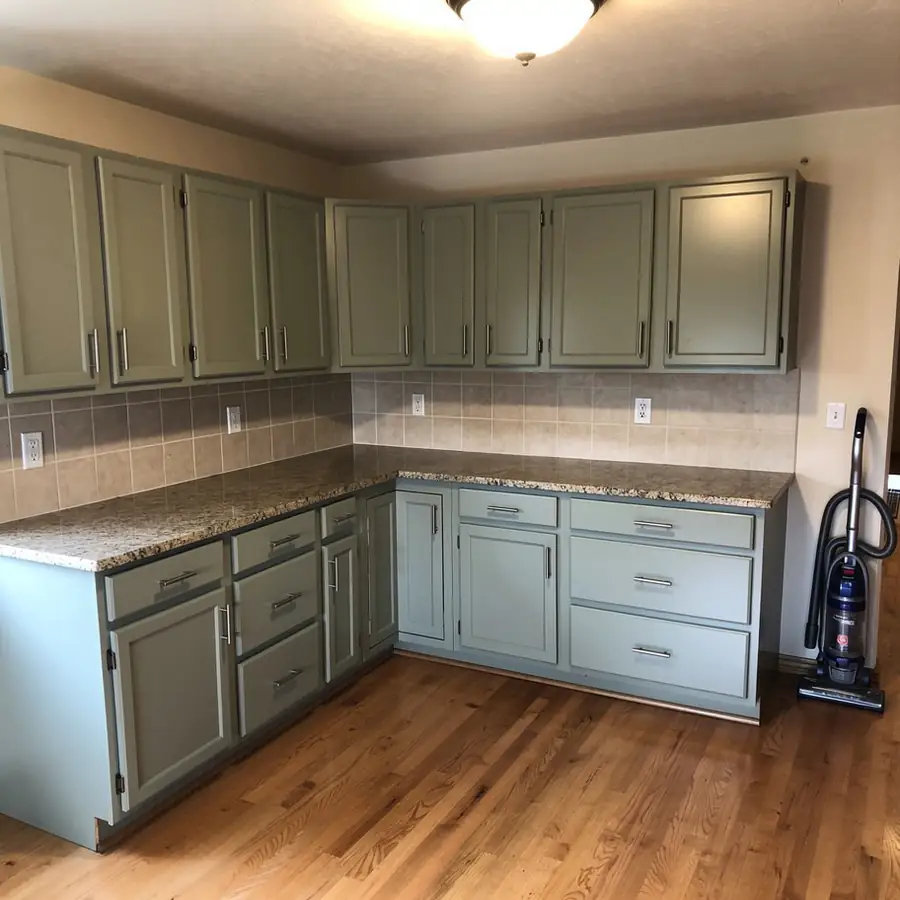
| Day | At our shop | In your home | Kitchen usable? |
|---|---|---|---|
| Day 1 | Doors and drawer fronts arrive, labelled and checked | Room protected, doors and hardware removed, boxes degreased and sanded | Yes: fridge, sink and stove |
| Day 2 | Doors degreased, sanded, filled and primed | Boxes filled, caulked and primed | Yes |
| Day 3 | First topcoat of Renner 2K | Boxes, face frames and end panels sprayed inside zip walls | No, for about one day |
| Day 4 | Second topcoat, then racked to cure | Boxes left to harden | Yes, with care around fresh paint |
| Days 5 to 7 | At least 24 to 48 hours of cure, then inspected and wrapped | Doors rehung, hinges adjusted, hardware fitted, walkthrough | Yes, gentle cleaning for 7 days |
Large kitchens with 40 or more pieces take 7 to 10 working days, with the crew on site for 4 to 5. An island on its own takes 2 days, a single vanity 2 to 3 days, and built-ins or laundry rooms 2 to 4 days.
We usually book 2 to 3 weeks out. Spring, from March to June, and the weeks before Christmas fill fastest.
Process FAQ
Questions About Our Process
People planning around kids, work and pets tend to ask the same few things.
How many days is my kitchen out of service?
About one day. The fridge, sink and stove stay usable through the 5 to 7 working days except on the day we spray the boxes, though the cabinets stay empty and the doors are away for 3 to 4 days.
Will the house smell of paint?
Only faintly, and mostly on spray day. Our topcoats are waterborne and meet the federal VOC limits in SOR/2009-264, and a filtered fan vents the work area out a window, so most families and pets stay home throughout.
Do I need to be home while you work?
No. Someone needs to let us in on day 1 and join us for the walkthrough, and many customers are at work in between. The same lead painter is there every day, so you always know who is in your house and what comes next.
What if it's cold or humid outside?
The weather doesn't reach your doors, because they're sprayed in our climate-controlled booth. In your home we need 15°C or warmer, which most houses are year-round.
Do you remove and reinstall the hardware?
Yes. Hinges and pulls come off on day 1 and are bagged by location, then refitted or swapped for new ones at reinstall.
Free estimate
Book a Walkthrough of Your Cabinets
Want to see how this process fits your kitchen? Book a free in-home estimate on an evening or a Sunday, or send photos and get a written plan and price within 1 business day.
- Day-by-day schedule set out before you book
- Primer and coating named for your cabinet material
- Booking usually 2 to 3 weeks out; spring fills first
- Shop
- 330 Gage Ave, Kitchener, ON N2M 5C6
- Monday to Saturday
- 7:00 am to 9:30 pm
- Sunday
- 9:00 am to 9:00 pm