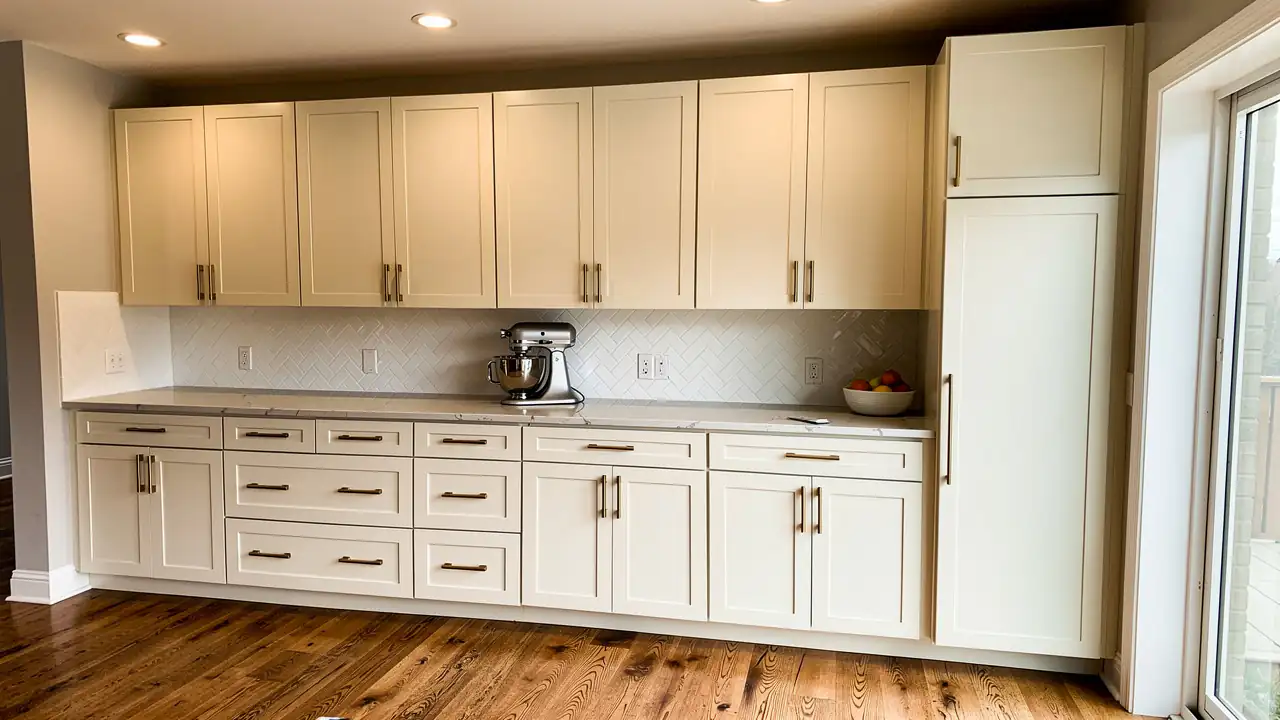
Spray painted warm white cabinets Kitchener kitchen

Booth-sprayed doors, no brush marks

Kitchen Cabinet Spray Painting in Kitchener

Spraying is the difference between cabinets that look painted and cabinets that look built that way. Kitchener Elite Cabinet Painting & Refinishing sprays every door and drawer front in our own booth and finishes the fixed boxes on site with a fine-finish HVLP gun, so a Kitchener kitchen comes back with no brush strokes, roller stipple or lap marks.

We have sprayed cabinets for homeowners, condo owners and small offices across Waterloo Region since 2010, more than 1,700 jobs in all. That volume is why we can tell you exactly where a sprayed finish is flawless and where it is very good but not identical.

We never roll or brush doors. Instead, we explain in plain terms which gun, which coating and which room each part of your kitchen goes through.

  • Written fixed quote
  • WSIB covered crew
  • 1-year labour warranty

What gets sprayed

Professional Cabinet Spraying for a Factory-Smooth Finish

Cabinet spray painting atomizes primer and paint into a fine, even mist that levels into a flat film, the same method cabinet factories use. Every part of your kitchen is sprayed, but not in the same place or with the same product.

Parts that come off go to the shop, and parts fixed to the wall are sprayed where they stand.

  • In our booth: doors, drawer fronts and removable panels, sprayed with Renner 2K waterborne polyurethane
  • In your home: boxes, face frames, end panels, crown, valance and islands, sprayed with Benjamin Moore ADVANCE through an HVLP gun
  • Same colour and sheen: both coatings are tinted to your colour and checked against a sprayed sample door
  • Who it suits: anyone who wants a finish that reads as factory-made, especially on slab and Shaker doors where flat panels show every brush mark

Spraying suits every cabinet material we paint, from oak and maple to MDF cabinet doors and sound melamine.

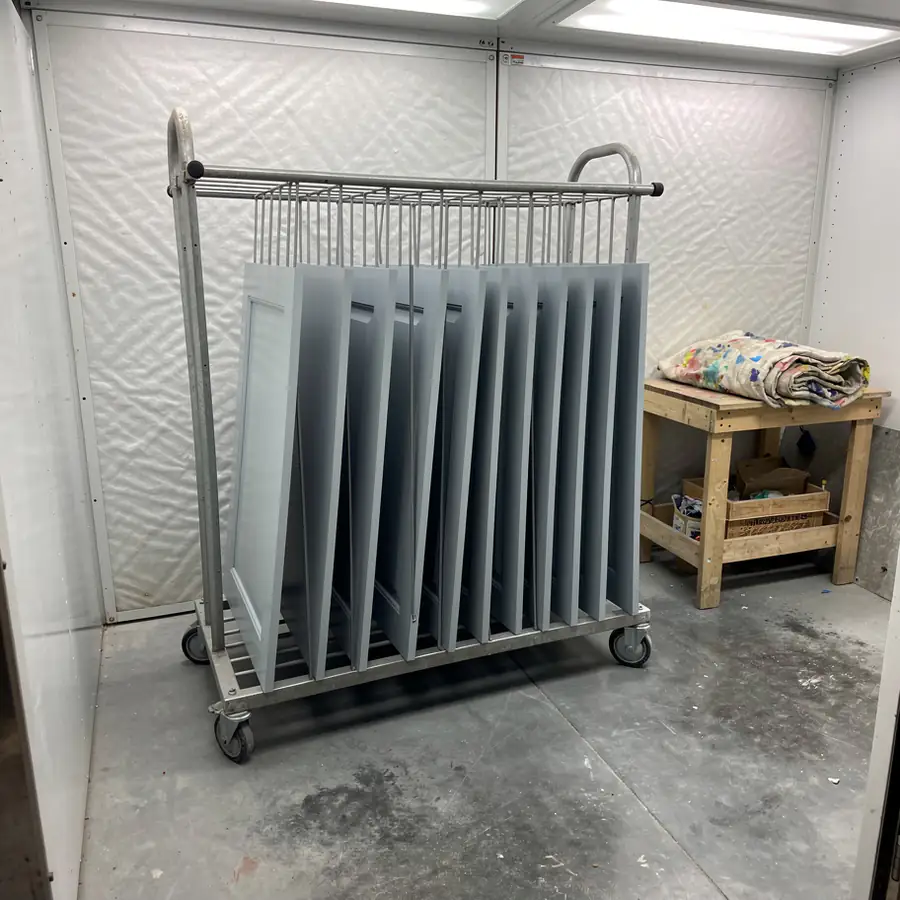
Sprayed doors drying on spray booth racks

The honest comparison

Sprayed vs Brushed and Rolled Cabinets

A sprayed finish is smoother, more even in thickness and better at reaching into Shaker corners and raised-panel profiles than a brush or roller. A careful brush job can still look tidy, but it shows strokes on flat panels in raking light from a window.

There is also a smaller difference inside a sprayed kitchen, between doors done in the booth and boxes done on site, and you should know about it before you hire anyone.

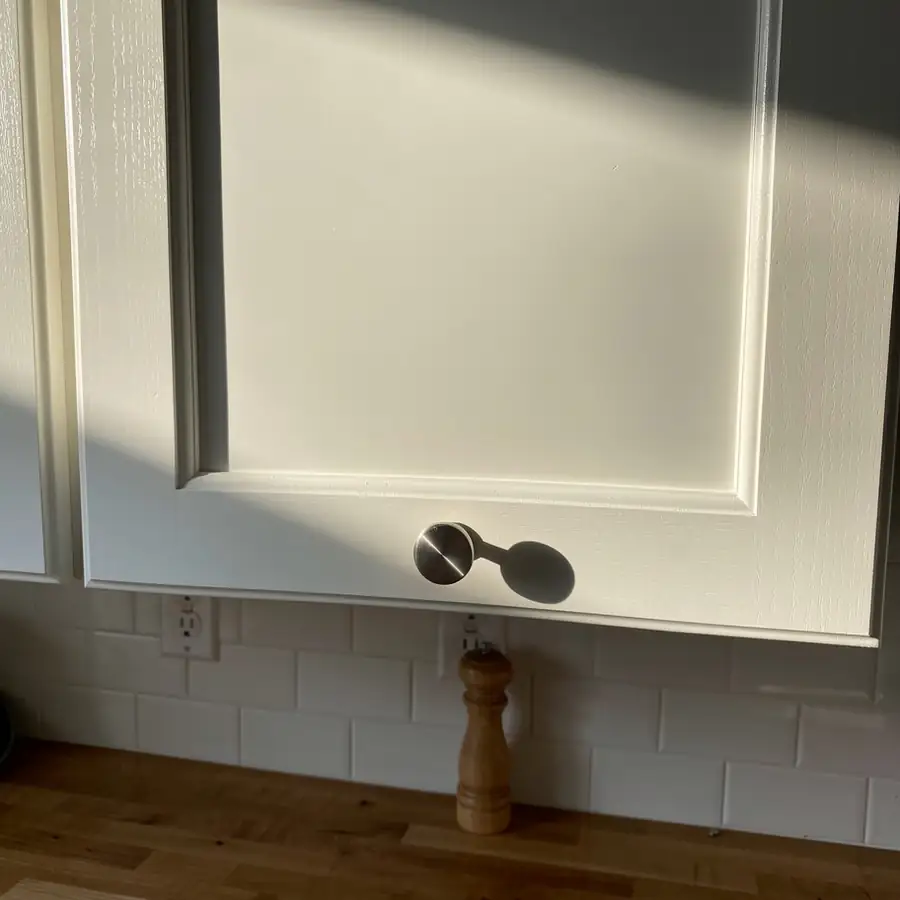
Sprayed white Shaker door in window light
Booth-sprayed doorsOn-site sprayed boxesBrushed and rolled
TextureGlass-smooth, factory lookVery smooth, levels like an oil paintBrush strokes and roller stipple visible up close
CoatingRenner 2K waterborne polyurethaneBenjamin Moore ADVANCE waterborne alkydUsually a 1K paint, thicker in some spots
HardnessHardest: a crosslinked two-component filmHard once cured at about 30 daysDepends on the paint; thick edges stay soft longer
Profiles and cornersEven film in every grooveEven film, masked edges kept crispPaint pools in corners and runs on edges
DisruptionDone off site, kitchen untouchedRoom sealed for about one dayWet paint in the room for every coat

Boxes are touched less and seen from further away, which is why a high-quality on-site spray coat is the right tool for them. The doors take the knocks, so they get the harder 2K finish.

Guns and setups

Spray Equipment We Use and Why

We use two kinds of spray equipment, and each one stays where it does the best job. HVLP lays down a fine finish with little overspray, while air-assisted airless builds film quickly on large batches of doors.

HVLP for Fine Finishes

High-volume, low-pressure (HVLP) guns atomize paint with a large volume of air at low pressure, so more coating lands on the cabinet and less drifts into the room. That control is why HVLP is the only gun we use inside your home.

  • Low overspray and bounce-back
  • Fine atomization for a smooth final coat
  • Used on boxes, face frames, islands and built-ins

Air-Assisted Airless for Speed and Build

Air-assisted airless pumps paint at high pressure and adds a little air at the tip to soften the spray pattern. In the booth it lets us coat a full rack of doors evenly and quickly, with the film build a durable 2K finish needs.

  • Even film build across large door batches
  • Finer pattern than straight airless
  • Used only in our shop booth

Why Straight Airless Stays Out of Your Kitchen

Straight airless sprayers move a lot of paint fast, but they throw more overspray and fog than a contained kitchen handles well. We would rather spend longer with an HVLP gun than risk paint mist on your floors, windows and countertops.

  • More overspray than HVLP
  • Harder to control near counters and appliances
  • Not part of our on-site setup

Our Gage Ave booth

Booth Spraying Doors and Drawer Fronts

Doors and drawer fronts are sprayed in the booth at our shop at 330 Gage Ave in Kitchener, where we hold the air at 18 to 24°C and 40 to 55% relative humidity. Those two numbers decide how waterborne coatings level, dry and cure, and a garage or driveway cannot hold them through a Waterloo Region winter or a July heat wave.

Each door is labelled on day 1, primed, then sprayed with two coats of Renner 2K and sanded with 320 grit between coats.

Why Sprayed Doors Look Factory-Made

Renner Italia 2K is a two-component waterborne polyurethane: a hardener crosslinks the resin as it cures, the same kind of chemistry used on factory cabinet finishes. Sprayed in thin, even coats in still, clean air, it flows out flat with no orange peel or dust nibs.

Racked, Cured and Checked

Finished doors are dry to the touch in about an hour, then rest on drying racks for at least 24 to 48 hours before they go back on. A typical kitchen's doors are in the shop for 3 to 4 days, and every one is checked under bright light before it leaves.

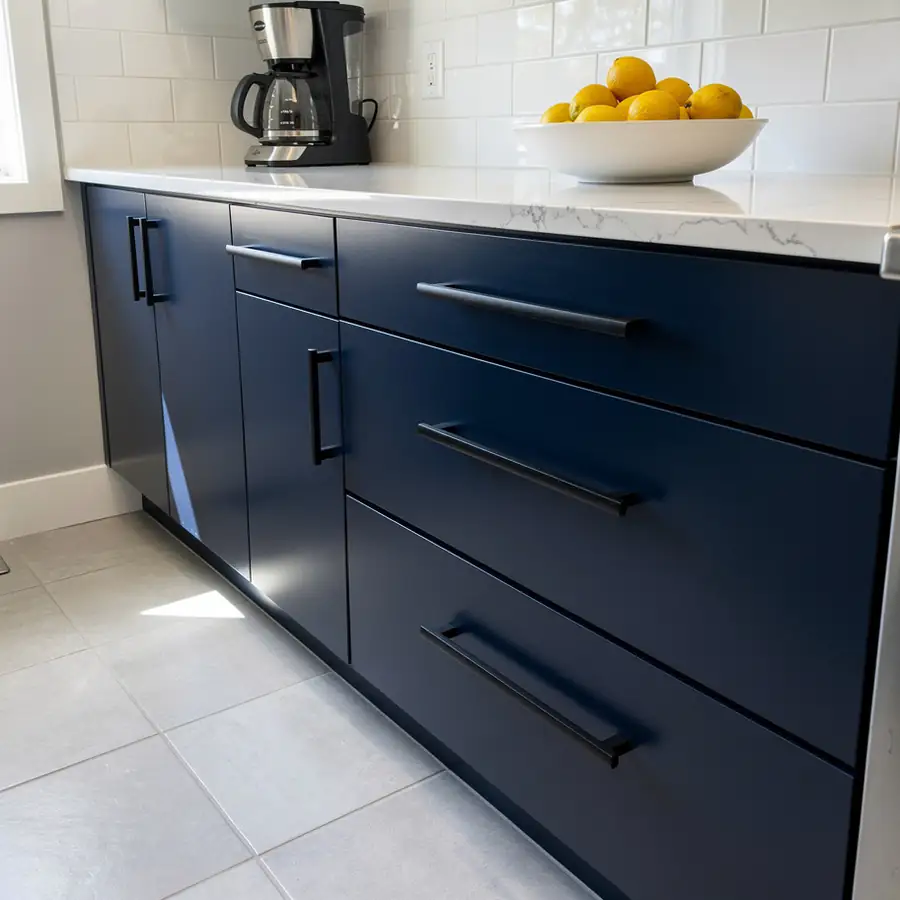
Smooth sprayed navy slab cabinets in Waterloo

On-site containment

Spraying Cabinet Boxes in Your Home

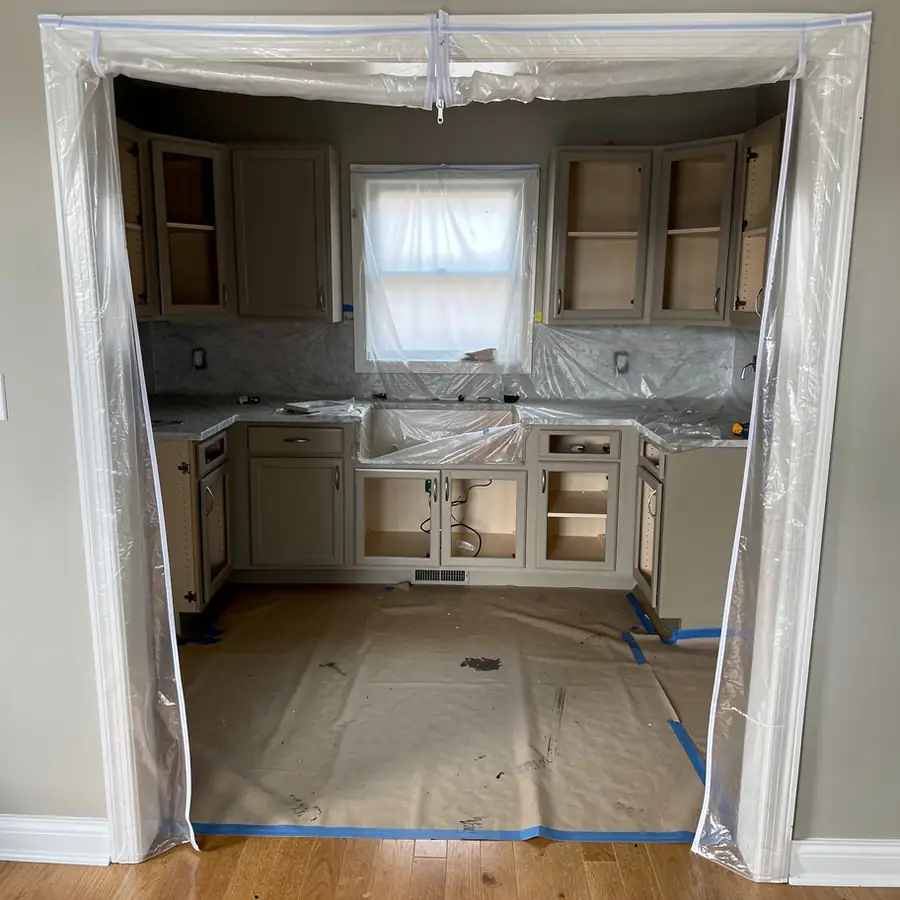
Cabinet boxes are sprayed in place inside a sealed work zone, so overspray stays on the cabinets and off your floors, counters and walls. Setting up that zone takes most of a morning, and it is the part of spraying that separates careful painters from fast ones.

This is how we set up a kitchen before an HVLP gun is switched on:

  • Ram Board taped down over the floor across the whole work area
  • Plastic zip walls with taped seams to separate the kitchen from the rest of the house
  • Countertops, backsplash, appliances, sink and windows covered with paper and plastic
  • Tape and paper masking along walls, ceilings and the underside of countertops
  • A negative-air fan with a filter, venting out a window, so fine mist is pulled out of the room instead of drifting through it
  • Hinge plates, interiors and drawer slides masked wherever they are not being painted

Boxes are primed and sprayed with Benjamin Moore ADVANCE, sanded with 320 grit between coats. The kitchen is off limits for about one day while the boxes are sprayed, and the room has to be 15°C or warmer, which matters in older Kitchener homes with cold outside walls.

One honest note: a home is never as clean as a booth. The lead painter inspects every box under work lights and sands out any dust nib before the final coat, so the boxes come out very smooth, but the doors are always the finest part of the job.
Freshly sprayed cabinet boxes inside zip walls

Primers and topcoats

Coatings Built for Spraying

Every coating we spray is waterborne and thinned for fine atomization, so it levels out instead of holding gun marks. All of them meet the federal VOC limits for architectural coatings under SOR/2009-264.

Renner 2K Waterborne Polyurethane

Our shop topcoat for doors, drawer fronts and removable panels. It crosslinks into a film that is harder and more chemical-resistant than any one-component paint, which is what doors near the sink and garbage pull-out need.

Benjamin Moore ADVANCE

Our on-site topcoat for boxes and anything fixed in place. Benjamin Moore ADVANCE is a waterborne alkyd that levels like an oil paint, tints to any Benjamin Moore colour and keeps odour low.

Sherwin-Williams Emerald Urethane

When you choose a Sherwin-Williams colour, we spray Emerald Urethane Trim Enamel on site instead. It is matched in colour and sheen to the 2K on your doors.

STIX and B-I-N Primers

INSL-X STIX bonds to melamine, laminate and glossy factory finishes. Zinsser B-I-N, a shellac primer, seals oak and cherry so tannins cannot bleed yellow-brown through a white topcoat.

Five to seven days

Spray Painting Timeline

A typical sprayed kitchen of 25 to 40 pieces takes 5 to 7 working days, with our crew in your home for 3 to 4 of them. Your fridge, sink and stove stay usable except on the day the boxes are sprayed, and our cabinet painting process shows every stage in order.

  1. Day 1: Protect and Remove

    We protect the room, label every door, drawer front and hinge, and take the doors to the shop.

  2. Shop Days: Booth Spraying

    Doors are degreased, sanded, primed and given two coats of Renner 2K, then racked to cure for at least 24 to 48 hours.

  3. Box Day: Spraying On Site

    The kitchen is sealed in zip walls and the boxes, face frames and end panels are primed and sprayed with HVLP.

  4. Final Day: Reinstall and Walkthrough

    Doors go back on, hinges are adjusted, hardware is fitted and we walk the kitchen with you and hand over the care sheet.

Large kitchens of 40+ pieces take 7 to 10 working days. Plan on gentle cleaning only for the first 7 days, and full hardness at about 30 days.

What spraying costs

Cabinet Spray Painting Prices

Spray painting a cabinet door costs $110 to $150 per door, both sides, before HST, and drawer fronts cost $75 to $95. A medium kitchen of 21 to 35 pieces usually lands between $3,400 and $5,200.

  • Tall pantry doors and full-height panels: $160 to $220 each
  • Second colour for a two-tone kitchen: $250 flat
  • Oak grain filling before spraying: $35 per door or drawer face
  • Minimum job: $650

Our cabinet painting pricing breaks down every factor that moves a quote, from door style to condo elevator access. If you only need doors sprayed, our cabinet door painting service prices them per piece with no visit to your home.

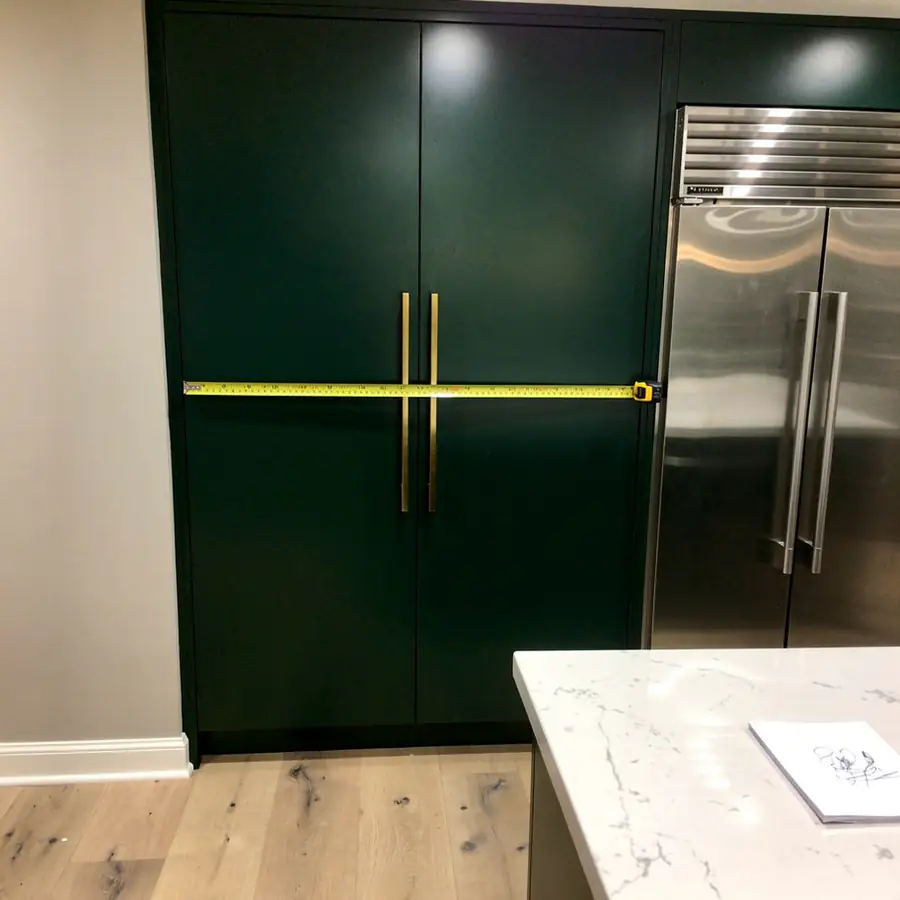
Tape measure on sprayed pantry door

Built to hold up

Why Our Spray Finish Lasts

A sprayed finish lasts when the surface under it is clean, every coat is sanded and the coating is allowed to cure. Skipping any one of those is what causes peeling on a sink base two winters later.

Degreased Twice, Sanded Every Coat

Kitchen grease and silicone polish are the number one cause of peeling, so every door and box is cleaned twice with Krud Kutter and rinsed with clean water. Festool sanders with HEPA extraction handle the scuff and the 320 grit between coats.

Controlled Cure

Waterborne coatings cure poorly when it is cold or damp, which is why doors stay in a climate-held booth and why we keep the home at 15°C or warmer. Nothing is rehung until it has cured for 24 to 48 hours.

1,700+ Jobs of Practice

After 16+ years of spraying in Waterloo Region, our painters know how each coating behaves in a dry January and a muggy August. Every job has one lead painter from the first day to the walkthrough.

One Booth for the Whole Region

We spray kitchens across Waterloo, Cambridge, Guelph and New Hamburg and Baden, and doors from all of them come back to the same booth. Our 1-year labour warranty covers peeling, flaking and bubbling caused by our prep or application.

Common questions

Cabinet Spraying FAQs

Spraying raises practical worries about mess, smell and cost, and these are the ones we hear on almost every estimate visit.

Will overspray get on my counters or floors?

No. Floors are covered with Ram Board, counters and appliances are wrapped, the room is sealed with zip walls and a filtered negative-air fan pulls mist out a window. HVLP guns also put far less paint in the air than airless sprayers.

Does spraying cost more than brushing?

Spraying takes more setup time for masking, but the coats themselves go on faster and need far less fixing. We do not roll or brush doors at all, so our per-door prices of $110 to $150 are spray prices, with no cheaper brushed option to compare.

Do sprayed cabinets smell?

Very little. Every coating we use is waterborne and low odour, the negative-air fan vents the work zone outdoors, and most families and pets stay home throughout the job.

Can you spray cabinets in a condo?

Yes. We work within building hours, book the elevator with padding and send a certificate of insurance to the property manager, all covered by our condo cabinet painting service.

Can you spray a clear finish instead of a colour?

Yes. If you would rather keep the wood grain, our cabinet refinishing options include a sprayed clear-coat refresh or a darker restain, finished in the same booth.

Free spraying quote

See Our Spray Finish Up Close

Every spraying job starts with a sample door or board sprayed in your colour and sheen, so you can judge the finish in your own kitchen light before we begin. Send us photos of your kitchen and we will reply with a fixed quote within 1 business day.

  • Sprayed sample in your chosen Benjamin Moore or Sherwin-Williams colour
  • Booth finish on every door and drawer front
  • HVLP spraying and full containment on site
  • 1-year labour warranty in writing
Shop
330 Gage Ave, Kitchener, ON N2M 5C6
Monday to Saturday
7:00 am to 9:30 pm
Sunday
9:00 am to 9:00 pm
Call 519-555-0123Free quote